The right check engine light scanner can save time and money by quickly identifying why the MIL is on, reading live data, and clearing codes after repairs. Below are five top options that cover a range of features, from basic code reading to advanced diagnostics, across popular OBD-II vehicles. Each product listing includes key capabilities to help you compare at a glance.
| Brand | Model | Key Benefit |
|---|---|---|
| ANCEL | AD310 | Fast fault code reading and clearing; compact design |
| MOTOPOWER | MP69033 | Wide protocol support; large LCD display |
| VDIAGTOOL | VD10 | Built-in DTC definitions; easy DIY diagnostics |
| FOXWELL | NT301 | Live data graphs; wide compatibility |
| BlueDriver | Bluetooth Pro | Comprehensive repair reports; mobile-friendly |
ANCEL AD310 Classic Enhanced OBD II Scanner

The ANCEL AD310 is one of the best-selling OBD II scanners and is recommended by auto professionals. It quickly identifies the cause of the check engine light, then reads and clears diagnostic trouble codes related to the emission system. It also provides live data, freeze frame information, I/M readiness status, and vehicle info. A compact 12-ounce body with a 2.5-foot cable makes it practical to use in tight engine bays, and its clearly labeled buttons and readable display simplify operation for both DIYers and pros.
With fast, accurate readings from the OBDII port, AD310 helps users determine repair needs and verify fixes. It draws power directly from the vehicle, so no batteries or chargers are needed. This model emphasizes a balance of ease of use, reliable performance, and portability for everyday diagnostics.
MOTOPOWER MP69033 Car OBD2 Scanner

The MP69033 offers broad compatibility with 9 protocols across 1996 to modern models, including 2000 EU and Asian cars. It provides code reading and erasing, live data, I/M readiness, and vehicle information, plus data flow and real-time curves. Its 2.8-inch LCD with white backlight makes data easy to read, even in dim conditions. This device gets power directly from the vehicle, removing the need for an external power source. It supports multiple languages, aiding users in different regions.
Designed for practical use, MP69033 focuses on essential diagnostic functions with a clear display and straightforward navigation, making it a strong fit for home garages and professional settings alike.
VDIAGTOOL VD10 OBD2 Scanner
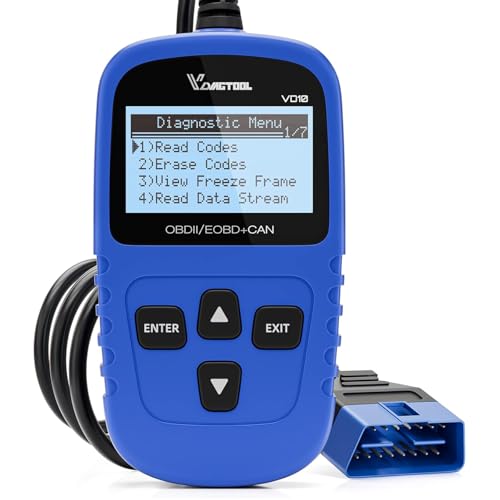
The VDIAGTOOL VD10 is a versatile DIY-friendly tool that plugs into the OBDII port to diagnose problems in seconds. It reads and clears codes, shows live data, Freeze Frame, I/M Readiness, and vehicle information. It emphasizes quick, straightforward fault identification and definition display using a built-in code database of over 3,000 entries. It’s designed to be user-friendly for hobbyists and car owners who need reliable on-vehicle troubleshooting without online lookups.
VDIAGTOOL’s key value lies in quick access to DTC definitions directly on the screen, streamlining the diagnostic flow from code retrieval to problem isolation and code clearing after repairs.
FOXWELL NT301 OBD2 Scanner

The NT301 is designed for professional-level readers who need reliable DTC retrieval and live data streaming. It can read and clear codes, access emissions readiness, and reset monitors. It also retrieves VIN under ignition-on conditions. While it excels in reading codes for a wide range of vehicles, it is not a substitute for more advanced systems like ABS or SRS diagnostics. Graphing live data helps technicians identify trends and anomalies in sensors, making it a strong option for daily diagnostics and routine maintenance checks.
NT301 provides clear, practical utility for mechanics and enthusiasts who want a straightforward, effective tool with dependable data visualization and broad compatibility across OBD-II vehicles.
BlueDriver Bluetooth Pro OBDII Scan Tool
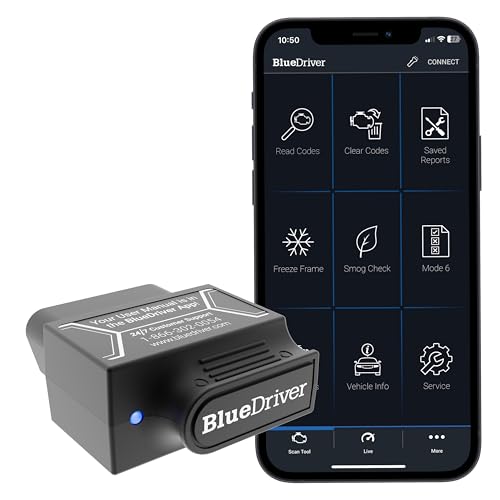
BlueDriver combines a professional-grade OBDII scanner with a mobile app to deliver comprehensive diagnostics. It reads and clears codes and provides unlimited repair reports with potential causes and fixes. The live data feature monitors vehicle health in real time, offering a broader view of engine performance and sensor data. Its wireless interface makes it convenient for smartphones and tablets, enabling on-the-go diagnostics and record-keeping without traditional handheld devices.
BlueDriver stands out for its extensive database and user-friendly app that aggregates repair insights, turning code reading into actionable troubleshooting guidance for a wide audience of DIYers and technicians alike.
Buying Guide: Key Considerations For Choosing A Check Engine Light Scanner
- Vehicle compatibility: Ensure the scanner supports the vehicles you own, including year range, OBD-II protocol coverage, and CAN networks. Some tools offer broader language support and regional codes, which can be helpful for non-US vehicles.
- Code reading versus advanced diagnostics: Basic readers retrieve and clear codes, while advanced tools provide live data, I/M readiness, freeze frame, MIL reset, and DTC definitions. Decide which features match your needs—DIY maintenance or professional diagnostics.
- Live data and graphs: Real-time sensor data helps identify trending issues. Graphing and data logging are valuable for spotting intermittent problems and verifying repairs after servicing.
- Built-in DTC library: A large, well-maintained DTC database reduces reliance on online lookups and speeds diagnosis. Some models include thousands of codes with definitions, while others pull data from the internet.
- Power source and portability: Some scanners draw power from the OBDII port; others require a battery. Portability matters if you work in tight spaces or need to move between vehicles.
- Display and usability: A clear LCD or mobile app interface, readable screens, and intuitive menus save time. Language support can also affect ease of use for non-English speakers.
- Connectivity: Bluetooth/Wi-Fi tools offer mobile convenience but require compatible devices and apps. Wired scanners provide immediate data without pairing issues but may be bulkier.
- Software updates and support: OBD-II standards evolve; choose a tool with regular updates and reliable customer support to ensure ongoing compatibility and access to new codes and features.
- Price-to-value balance: Higher-priced tools often offer broader coverage and features, but for basic home use, a mid-range scanner with essential reads and clear definitions is typically sufficient.
- Warranty and reliability: Look for products with solid build quality, favorable reviews, and a warranty that covers defects and software reliability.
The choice among these options depends on your needs: occasional DIY checks, frequent home diagnostics, or professional-grade troubleshooting. For quick code retrieval and clear definitions, models like AD310 or MP69033 are strong, affordable starts. If you want broader data visualization and repair guidance, BITs like NT301 or BlueDriver provide enhanced insight and mobile flexibility. Consider how you will use the tool in everyday scenarios and select a scanner that aligns with your vehicle lineup and diagnostic goals.