Choosing the right conventional motor oil can help protect engine parts, reduce deposits, and maintain reliable performance across daily drivers. This guide highlights top conventional oils known for wear protection, sludge resistance, and cold-start performance. Each product is evaluated for viscosity options, deposit control, and additive quality to support engine longevity. The selections below cover a range of common American vehicles and driving conditions, from routine commuting to hotter climates.
| Product | Brand | Viscosity | Size |
|---|---|---|---|
| Castrol GTX 10W-30 Conventional Motor Oil | Castrol | 10W-30 | 5 Quarts |
| Castrol GTX 10W-40 Conventional Motor Oil | Castrol | 10W-40 | 5 Quarts |
| Valvoline Daily Protection 10W-30 | Valvoline | 10W-30 | 5 Quarts |
| Castrol GTX 20W-50 Conventional Motor Oil | Castrol | 20W-50 | 5 Quarts |
| Pennzoil 10W-30 Motor Oil | Pennzoil | 10W-30 | 1 Quart |
The following sections detail each product, including key protection features, typical use cases, and what to consider when selecting an oil for your vehicle and climate.
Castrol GTX 10W-30 Conventional Motor Oil, 5 Quarts

Castrol GTX 10W-30 Conventional Motor Oil is designed to deliver robust protection against viscosity and thermal breakdown, helping to maintain oil film strength under typical driving conditions. The formulation emphasizes superior protection against engine sludge and deposits, which can accumulate in engines across daily commutes. With premium base oils and anti-wear additives, this oil aims to extend engine life by reducing wear in critical components such as cam lobes and bearings. It is well-suited for an array of gasoline engines that require a 10W-30 grade and 5-quart capacity for household maintenance or service intervals.
Castrol GTX 10W-40 Conventional Motor Oil, 5 Quarts

Castrol GTX 10W-40 provides strong protection against viscosity and thermal breakdown while offering enhanced protection against sludge formation. The 10W-40 grade is a good option for engines operating in warmer climates or older engines with looser tolerances that benefit from a slightly thicker oil at operating temperature. This product continues Castrol’s tradition of using advanced base oils and anti-wear additives to promote smoother starts and extended oil life, aligning with maintenance routines that favor reliable performance through peak driving seasons.
Valvoline Daily Protection 10W-30 Conventional Motor Oil, 5 Quart
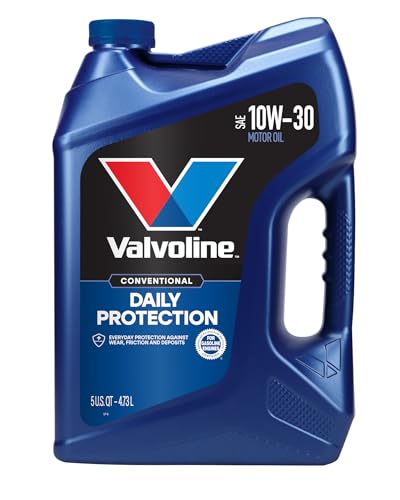
Valvoline Daily Protection 10W-30 is formulated to offer everyday protection against wear, deposits, and sludge—the kinds of issues that can contribute to engine failure. The oil is designed to perform well in normal driving conditions, maintaining high-temperature protection for severe engine environments. Its cold-weather performance supports easier starts by flowing readily at low temperatures, helping minimize wear during cold starts. This makes it a practical, all-purpose option for typical American daily drivers seeking dependable protection and straightforward maintenance intervals.
Castrol GTX 20W-50 Conventional Motor Oil, 5 Quarts

Castrol GTX 20W-50 is aimed at engines operating under higher heat or demanding conditions where a thicker oil film supports wear protection and durability. The product emphasizes following the vehicle manufacturer’s recommendations, as well as featuring TriShield technology for improved deposit protection. The thicker viscosity at operating temperature can be advantageous for certain older or high-load engines, particularly in hot climates or in heavy-use scenarios where film strength is critical for preventing wear and maintaining consistent oil pressure.
Pennzoil 10W-30 Motor Oil, 1 Quart

Pennzoil 10W-30 is formulated to help keep engines clean and responsive, providing proven wear protection based on standard wear tests. The product emphasizes preventing dirt and contaminants from forming performance-robbing deposits, supporting consistent engine performance over time. Its 1-quart size makes it a convenient option for topping off engines or for small maintenance tasks, especially for drivers who prefer to keep a small supply of oil on hand for routine checks and service intervals.
Buying Guide
When selecting conventional motor oil, consumers should consider viscosity, climate, vehicle requirements, and driving style. Key factors include:
- Viscosity grade: Align with the vehicle’s owner manual recommendations. Common grades include 5W-30, 10W-30, and 10W-40. In hotter climates or high-load applications, higher high-temperature viscosity like 20W-50 may be appropriate if recommended by the manufacturer.
- Engine wear protection: Look for oils with robust anti-wear additives and deposit control, which help protect camshafts, bearings, and lifters, especially in older engines or engines with higher mileage.
- Sludge and deposit control: Oils that emphasize sludge prevention and deposit protection can improve long-term engine cleanliness and reliability.
- Cold starts and winter performance: Oils with good low-temperature flow minimize wear during cold starts; this is important for daily commuters in cooler regions.
- Maintenance and compatibility: Use oils specified by the vehicle manufacturer and adhere to oil change intervals to maximize performance and protection.
- Availability and packaging: Consider the size that fits your maintenance routine. Bulk options may reduce trips to the store, while smaller bottles offer flexibility for topping off and small service jobs.
- Brand and additive quality: Reputable brands often provide consistent quality and proven performance in independent testing, helping ensure predictable results across driving conditions.
In practice, the best conventional oil for a given vehicle depends on engine design, climate, and driving patterns. For daily American drivers, a 10W-30 or 10W-40 grade from a trusted brand with strong deposit control and anti-wear protection often provides a reliable balance of cold-start performance and high-temperature resilience. For engines that operate in hotter environments or under heavier loads, a higher-temperature viscosity such as 20W-50 may be appropriate if the manufacturer approves it. Always corroborate with the vehicle owner’s manual and service history to make an informed choice.