If you’re pairing passive component speakers with a modern amplifier, you want clean power, solid imaging, and flexible connectivity. The following five amps come from reputable brands and provide robust support for 2‑channel and multi‑channel setups, including balanced inputs, built‑in DACs, and bass/treble control. Each model is suitable for home theaters, garages, patios, and desks where passive speakers are used. Read on to compare features, performance, and what to look for when choosing the best amplifier for your component speakers.
Summary of Selected Products
| Product | Brand | Key Strength | Typical Use |
|---|---|---|---|
| BT20A Bluetooth Stereo Amplifier | Fosi Audio | Compact, easy setup, Bluetooth | Small rooms, desktops, patios |
| ZA3 Balanced Stereo Amplifier | Fosi Audio | Balanced inputs, high power | Home theater, bookshelf systems |
| TB10D 2‑Channel Amplifier | Fosi Audio | High power per channel, bass/treble control | Bookshelves, desktop, sub integration |
| V3 Stereo Amplifier | Fosi Audio | Premium components, low noise | Desktop, home theater, HiFi setups |
| A07 Premium Power Amplifier | AIYIMA | High output, compact design | Desktop, bookshelf systems |
Fosi Audio BT20A Bluetooth Stereo Amplifier
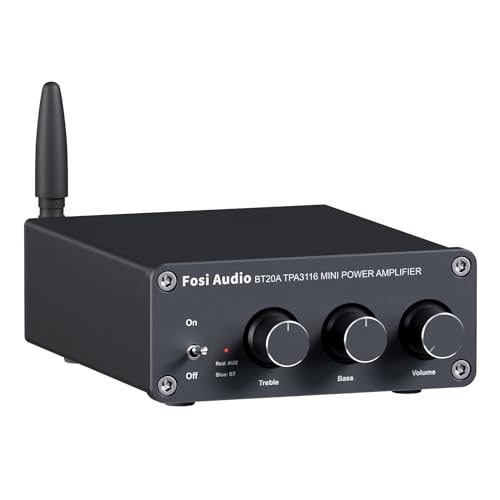
The BT20A is a compact, entry‑level two‑channel amplifier designed for passive bookshelf or small floorstanding speakers. With 100W per channel (max), it can drive multiple cabinets in home use or small venues. Its simple, no‑frills design emphasizes straightforward operation and quick setup, making it ideal for users who want reliable power without complex configurations. Tone controls for bass and treble enable quick room tuning, while Bluetooth connectivity adds wireless input options for consumer electronics like phones and streamers. This model suits spaces where a tidy footprint matters and sound quality remains a priority.
ZA3 Balanced Stereo Amplifier

The ZA3 provides flexible stereo and mono modes, with power up to 180W per channel in stereo and up to 235W in mono. It uses balanced inputs (XLR/¼” TRS), a 12V trigger‑in for seamless on/off synchronization, and premium components (TPA3255, NCC capacitors, ELNA, WIMA). SINAD and SNR figures indicate high fidelity with low noise. This model is well suited for users who want robust, clean amplification and reduced noise in a setup that may include subwoofers or a multi‑room system. It complements higher‑end passive speakers with precise dynamics.
Fosi TB10D 2‑Channel Amplifier

The TB10D delivers 300W per channel with the TPA3255 chip, capable of driving 2–8 ohm speakers for clean, dynamic sound. Its flexibility makes it a strong option for integrating a turntable with a preamp or adding bass shakers to a gaming or home theater system. Bass and treble controls offer room tuning, and a built‑in power switch adds convenience for setups that require quick enable/disable. The TB10D is a practical choice when you want substantial power in a compact enclosure for desktop or bookshelf configurations.
Fosi V3 Stereo Amplifier

The V3 combines a compact form with substantial power, using the TPA3255 Class‑D chip to deliver up to 600W total into 2–8Ω loads. It emphasizes audiophile‑grade components, a low noise floor, and top‑tier signal clarity. Cooling is addressed with an efficient heatsink design to maintain performance during extended listening. This model is ideal for desktop hi‑fi systems or bookshelf setups where space is at a premium but sonic detail and low distortion matter. It pairs well with quality passive speakers to reveal more nuanced detail in music and movies.
AIYIMA A07 Premium Amplifier

The A07 uses TI’s TPA3255 chip with a compact chassis, delivering up to 600W total to drive 2–8Ω speakers. It’s marketed as a simple yet powerful mini amp for desktop or bookshelf systems, ideal for users who want strong performance without occupying a lot of space. The combination of robust power, straightforward controls, and a small footprint makes it a versatile option for hobbyist setups or compact living rooms. It is especially suitable for users who value reliable headroom and clean amplification for component speakers.
Buying Guide: Key Purchase Considerations And Comparisons
- Power Output And Load Matching: For component speakers, ensure the amplifier delivers enough wattage without distortion. Look for a comfortable headroom margin (aim for less than 1 dB clipping under typical listening levels) and verify compatibility with your speaker impedance (2–8 ohms is common).
- Input Options And Connectivity: If you need streaming from a phone or computer, Bluetooth or digital inputs can be crucial. Balanced inputs (XLR/TRS) reduce noise in longer runs and are beneficial in multi‑component setups. Pre‑outs are useful for subwoofers or adding an additional amp.
- Sound Shaping Controls: Bass and treble controls, line‑level controls, and selectable modes (stereo vs. mono) can help tailor the sound to your room and content. Consider how much adjustment you want before diving into room acoustics or speaker positioning.
- Cooling And Build Quality: Class‑D amps are efficient, but long listening sessions can generate heat. Look for robust heatsink design or venting if you plan to drive speakers at high levels for extended periods.
- Size And Placement: If space is limited, a compact model like the BT20A or V3 can fit on a desk or shelf. Ensure there’s adequate ventilation and clearance around the unit.
- Reliability And Support: Choose amplifiers from brands with a track record for durable components (TPA3255, NCC, ELNA, WIMA parts are indicators of quality). Consider warranty terms and customer support quality.
- Mono And Multi‑Channel Configurations: If you plan to run multiple speakers or a combined setup with subwoofers, explore models offering mono mode or multi‑channel outputs for flexibility and future upgrades.
- Budget Sensibility: While higher power and premium parts boost fidelity, a balanced choice is often best for standard component speaker systems. Prioritize the features you’ll actually use in your room.
The selections above offer a range of capabilities—from compact Bluetooth amplifiers for small spaces to high‑power, balanced models suitable for more demanding home theater and hi‑fi configurations. When choosing, align the amp’s power, input options, and form factor with your component speakers and listening environment to achieve clear, dynamic sound with minimal distortion.