Choosing the right battery for an RV involves balancing capacity, weight, reliability, maintenance, and cost. This guide focuses on five highly regarded options that consistently perform in RV setups, from weekend trips to extended off‑grid adventures. We compare AGM and LiFePO4 designs, highlight key strengths, and offer practical buying tips to help you match a battery to your travel style and electrical needs.
Summary of chosen products
| Product | Brand | Type | Capacity |
|---|---|---|---|
| Weize Deep Cycle AGM 12V 100Ah | WEIZE | AGM | 100Ah |
| 2-Pack 12V 100Ah LiFePO4 | GRNOE | LiFePO4 | 100Ah per battery |
| ECO-WORTHY 3584Wh 12V 280Ah LiFePO4 | ECO-WORTHY | LiFePO4 | 280Ah |
| Renogy Deep Cycle AGM 12V 100Ah | Renogy | AGM | 100Ah |
| ELEFAST 12V 330Ah LiFePO4 | Elefast | LiFePO4 | 330Ah |
Weize Deep Cycle AGM 100Ah for RVs
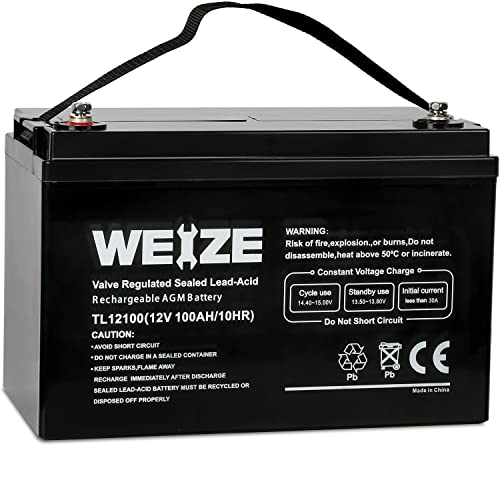
The Weize AGM 12V 100Ah battery is a sealed, maintenance‑free option designed for RV, solar, and off‑grid systems. Its AGM construction reduces the risk of acid leakage and enables straightforward siting in an RV storage compartment. The battery supports a wide operating temperature range and features a practical 1100A max discharge current for short bursts of heavy load. Its low monthly self‑discharge between 1–3% helps with longer storage between trips, though proper charging and temperature control optimize longevity. This model suits users who want a reliable, simple‑to‑use solution with minimal upkeep.
Key considerations: AGM chemistry emphasizes safety and maintenance simplicity, with a slightly heavier profile than comparable LiFePO4 units. For RVs with limited space and a preference for plug‑and‑play reliability, this option delivers solid performance without the need for a dedicated lithium charger or sophisticated BMS management. Battery safety and enclosure integrity are reinforced by the sealed design, making it a common choice for recreational vehicles that prioritize peace of mind.
GRNOE 2‑Pack 12V 100Ah LiFePO4

The GRNOE LiFePO4 12V 100Ah battery offers a lightweight, space‑efficient energy solution for RVs, with a built‑in 100A BMS and low‑temperature protection. Its compact dimensions and reduced weight—roughly one‑third the mass of traditional lead‑acid equivalents—make it a strong replacement for SLA/AGM packs in mobile setups. The smart BMS guards against overheating, overcurrent, overcharge, and short‑circuits, while the included protection system helps maintain long‑term battery health, even in cold climates where discharge restrictions apply. A single battery can be used in multiple configurations with compatible charging equipment.
Reference notes: The model emphasizes longevity with an expected life well beyond traditional AGM packs. Users should pair it with a charger compatible with LiFePO4 chemistry and follow guidance on charging voltages (notably higher than lead‑acid charging) to achieve full capacity and best cycle life. The 2‑pack option is appealing for dual‑circuit RV lighting or independent house bank configurations.
ECO-WORTHY 3584Wh 12V 280Ah LiFePO4
The ECO-WORTHY 280Ah LiFePO4 system delivers substantial energy for higher‑demand RV appliances and longer off‑grid stays. Featuring a built‑in 200A BMS and Bluetooth real‑time monitoring, it provides direct insight into voltage, current, and remaining capacity via the ECO‑WORTHY app. The design includes an advanced compression fixture to improve durability and withstand travel vibrations, while low‑temperature protection ensures charging safety in cold environments. This model is well suited for full‑time RVers who require a robust, scalable power source with remote monitoring capabilities.
Operational considerations: LiFePO4 chemistry provides excellent cycle life, but users should ensure proper charging protocols and equipment compatibility, particularly with high‑voltage or multi‑battery banks. The built‑in protections simplify installation in RVs where a dedicated BMS may be desirable for system monitoring and safety.
Renogy Deep Cycle AGM 12V 100Ah

Renogy’s Deep Cycle AGM 12V 100Ah battery is a trusted choice for RVs and off‑grid builds, offering maintenance‑free operation with sealed, spill‑proof construction. Its compatibility with series and parallel connections (including up to four modules in parallel) makes it easy to expand capacity as needs grow. The sealed design reduces venting concerns in confined RV compartments, while the inherent safety of AGM chemistry minimizes risk during transport and travel. Renogy’s widely recognized reliability and support ecosystem are notable advantages for RV owners seeking a proven, no‑frills power solution.
Considerations include weight and cycle life relative to LiFePO4 options. For RV users prioritizing simple maintenance and solid performance with a lower upfront cost, this AGM choice remains a top contender, particularly for smaller to mid‑sized builds or as a supplementary house bank alongside other power sources.
ELEFAST 330Ah LiFePO4 RV Battery

The ELEFAST 330Ah LiFePO4 battery targets higher energy needs with a robust 300A continuous discharge capability and a built‑in BMS plus Bluetooth monitoring. Suitable for RVs that run high‑draw appliances like air conditioners or microwaves, it supports series/parallel configurations for larger bank setups. A key feature is the low‑temperature protection, which helps maintain safety and performance in cooler climates. The tablet‑style app interface provides live data and diagnostics, aiding proactive maintenance and planning for longer trips or off‑grid adventures.
Practical notes: High capacity LiFePO4 packs like this require compatible charging gear and proper wiring to maximize efficiency and life. For RV enthusiasts, this model represents a premium solution when maximum usable energy and remote monitoring are priorities, especially in winter camping or extended boondocking scenarios.
Buying Guide: Key Purchase Considerations For RV Batteries
- Chemistry and longevity: AGM batteries offer maintenance‑free operation suitable for smaller rigs or cost‑conscious buyers, while LiFePO4 packs deliver longer life, lighter weight, and deeper discharge capabilities. Consider expected cycle life, total weight, and space when choosing between these chemistries.
- Capacity vs. usable energy: A higher Ah rating matters, but LiFePO4 cells often deliver closer to their nominal capacity in real‑world use. For full‑timers or those running high‑drain appliances, aim for a larger usable energy reserve and plan for daily usage and reserve margins.
- Charging compatibility: Ensure your RV’s charger, solar controller, and inverter can support LiFePO4 or AGM charging profiles. Some LiFePO4 packs require specific charging voltages (e.g., around 14.4–14.6V) to reach full capacity.
- Inbuilt safety features: A robust BMS (Battery Management System) protects against overcharge, overdischarge, short circuits, and overtemperature. Bluetooth or app monitoring adds visibility for remote RV setups or long trips.
- Weight and space: LiFePO4 batteries are notably lighter than AGM equivalents, enabling more flexible placement and easier handling during RV customization or upgrades.
- Maintenance and care: AGM cells are sealed and typically require less daily upkeep, but LiFePO4 cells still need periodic checks on connections and charging equipment to maintain maximum efficiency over time.
- System integration: Plan a coherent energy system that matches your power needs, including solar panels, inverters, and the ability to expand your battery bank as required by future trips or upgrades.
- Warranty and support: Look for brands with solid customer support and clear warranty terms. For RVs, reliable service helps minimize downtime during travel.
Choosing the best battery for an RV depends on how you balance energy needs, portability, and maintenance. AGM options are dependable and cost‑effective for many users, while LiFePO4 systems deliver superior longevity, safety features, and the potential for larger, scalable setups. The right mix often involves a primary high‑capacity LiFePO4 bank for essential power, supplemented by AGM units for auxiliary needs, depending on your budget and travel style.