Choosing the right mono amplifier is crucial for delivering clean, powerful bass without overheating or distortion. This guide highlights five top-rated car subwoofer amplifiers that balance efficiency, output, and reliability. Each selection is evaluated for power, stability at low ohms, and built-in features like bass boost and adjustable crossovers to help you get the best sonic performance from your subwoofer setup.
Summary of selected products:
| Product | Brand | Max Power (1 Ohm) | Stable Ohms | |
|---|---|---|---|---|
| Skar Audio RP-1200.1D Monoblock | Skar Audio | 1600W peak | 1 Ohm | Remote bass level control, +6/+12 dB boost at 45Hz |
| AUDIOZERONE ZE1000.1 | AUDIOZERONE | 2000W max | 1 Ohm | Compact Class D, high efficiency, 1 Ohm stability |
| Skar Audio RP-800.1D | Skar Audio | 1200W peak | 1 Ohm | Remote bass level control, 20Hz–250Hz range |
| Orion Cobalt CBA2000.1D | ORION | 2000W max | 1/2/4 Ohms | Bass boost, MOSFET power supply, bass knob included |
| BOSS R1100M | BOSS Audio Systems | 1100W max | 2 Ohms | Low/high level inputs, remote subwoofer control |
Skar Audio RP-1200.1D Monoblock Amplifier
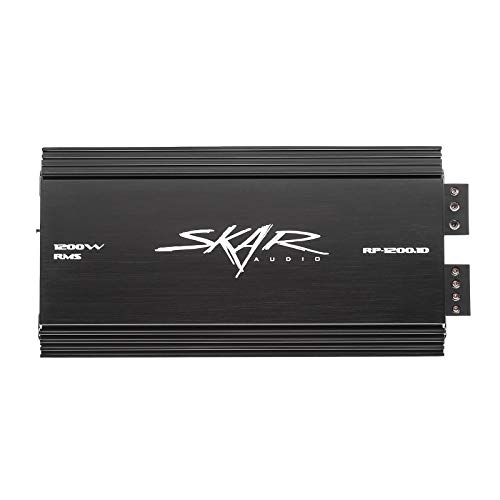
The RP-1200.1D from Skar Audio is a true monoblock Class D amplifier designed to drive larger subwoofers with efficiency. It delivers peak power up to 1,600 watts at 1 ohm and 1,200 watts RMS, acknowledging the demanding power needs of hefty subwoofers while maintaining thermal performance. The compact form factor helps with installation in tight spaces. A front-panel bass EQ switch provides a +6 or +12 dB boost at 45 Hz, allowing quick tailoring of bass presence without needing external processors. Its 20 Hz to 250 Hz frequency response makes it versatile for many subwoofer voice coils.
Key considerations:
– Pros: High output at 1 ohm, built-in bass boost for quick setup, efficient Class D design reduces heat.
– Cons: Requires proper wiring to avoid impedance missteps; budget-conscious buyers should confirm compatible subwoofers and electrical system upgrades if pushing full rails.
AUDIOZERONE ZE1000.1 2000W Monoblock

The ZE1000.1 from AUDIOZERONE provides substantial subwoofer power in a compact package. With 2000 watts max at 1 ohm and 1000 watts RMS at 1 ohm, this Class D amplifier is built for demanding sub loads. The model is designed to stay efficient, minimizing heat while sustaining high output. It’s suitable for users aiming to power one sub aggressively or multiple smaller subs in a tight space. The device’s stability at 1 ohm supports aggressive bass demand without frequent heat shutdowns.
Key considerations:
– Pros: Very high max power, strong 1-ohm stability, efficient operation.
– Cons: Some users may prefer a more feature-rich model with additional crossover options or bass management controls.
Skar Audio RP-800.1D Monoblock Amplifier

The RP-800.1D from Skar Audio is a slightly smaller yet capable monoblock option. It delivers a peak of 1,200 watts at 1 ohm with 800 watts RMS, paired with a 20 Hz to 250 Hz frequency range and an on-board bass EQ switch for +6 or +12 dB boost at 45 Hz. This model is well-suited for users who want strong bass impact without maximizing power demands. The built-in features help tailor the sound to various subwoofers and listening preferences, while class D efficiency keeps temperature in check during extended play.
Key considerations:
– Pros: Balanced power, compact footprint, easy bass tuning with built-in EQ switch.
– Cons: May still require adequate electrical upgrades for sustained high output on very large subs.
Orion Cobalt CBA2000.1D Monoblock

The Orion Cobalt CBA2000.1D stands out with robust 1-ohm, 1/2/4-ohm stability and a MOSFET power supply. It offers up to 2,000 watts maximum, with features like adjustable low-pass crossover and bass boost. The included bass knob provides tactile control for on-the-fly adjustments, making it a practical option for listeners who want adaptable bass performance in different music genres. The robust build emphasizes reliability under continuous bass demand and energy efficiency typical of Class D designs.
Key considerations:
– Pros: Wide impedance options, strong bass control with dedicated knob, efficient MOSFET supply.
– Cons: Requires attention to wiring and enclosure setup to maximize 1-ohm performance and thermal management.
BOSS R1100M Monoblock

The BOSS R1100M offers 1,100 watts max at 2 ohms, with 550 watts max at 4 ohms. It is a compact monoblock with MOSFET power and a built-in low-pass filter, along with bass boost and protective circuits. The remote subwoofer control enhances user flexibility, letting you adjust bass from the vehicle’s seating area. It supports both low and high-level inputs, making it compatible with a wide range of factory or aftermarket head units. The enclosure-friendly dimensions and straightforward setup make it a practical entry for bass-focused audio builds.
Key considerations:
– Pros: Versatile input options, remote bass control, solid protection features.
– Cons: Lower RMS output compared to some high-end models; best when matched with suitable sub/box to maximize perceived output.
Buying Guide: Key Purchase Considerations And Comparisons
When selecting a car amplifier for a subwoofer, consider power needs, impedance stability, and install practicality. Mono blocks are designed to feed subwoofers with maximum clean output and minimal distortion, but the best choice depends on your sub count, enclosure, and electrical system.
- Power and impedance: Match RMS power at your subwoofer’s impedance. If you run at 1 ohm, ensure the amp provides stable performance at that load. High peak wattage is appealing, but you want consistent RMS delivery for loud, clean bass.
- Class D efficiency: Class D amps generate less heat and are generally more compact, which helps in tight installations. Look for models with thermal protection and good heat sinking, especially if the vehicle experiences heat during long listening sessions.
- Bass control features: Built-in bass boost, adjustable low-pass filters, and remote bass knobs simplify tuning without external processors. Consider how quickly you want to adjust bass while driving.
- Inputs and compatibility: Low-level RCA inputs and high-level inputs expand compatibility with stock radios. Remote control features and input options affect ease of integration into existing systems.
- Physical footprint and installation: Check dimensions to ensure the amp fits your trunk or under-seat space. A smaller footprint helps with routing power wires and coax runs.
- System integration: Plan for wire gauge, fusing, grounding, and the electrical system’s capacity. A higher-power system may require additional battery or alternator considerations to maintain voltage under load.
- Brand reliability and support: Look for reputable brands with clear warranty terms and accessible customer support, especially for DIY installers.
- Compatibility: Confirm that your subwoofer’s impedance and the amplifier’s stable ohms align. Running mismatched impedance can lead to overheating or reduced performance.
- Wiring kit: Use an appropriate power wire gauge, grounding strap, and a suitable fuse rating close to the battery to protect the system. Poor wiring is a common cause of underperformance.
- Enclosure alignment: The sub’s enclosure type (sealed or ported) affects the perceived bass output. Pair the amp with a sub and enclosure that optimize the targeted listening style.
- Sound goals: Decide if you want tight, accurate bass for music or a more boomy, bass-forward experience. This choice guides crossovers, bass boost levels, and the number of subs.
- Maintenance: Class D amplifiers require less cooling, but periodic checks on wiring and connections help prevent volt drops and corrosion that degrade performance over time.