Finding the right car diagnostic code reader can save time, money, and frustration when the check engine light comes on. This guide highlights five reliable OBD II scanners that cover a wide range of vehicles and features—from basic code reading to live data, DTC lookups, and MIL resets. Each option is suitable for DIYers and professional technicians alike, offering easy connections, clear displays, and robust code libraries. Use this overview to compare capabilities, compatibility, and user experience before you buy.
| Product | Brand | Key Feature | Amazon Link |
|---|---|---|---|
| AD310 Classic Enhanced | ANCEL | Reads/clears codes, live data, freeze frame, I/M readiness | View |
| VD10 OBD2 Scanner | VDIAGTOOL | Simple DIY diagnostics, 3000+ codes, I/M readiness | View |
| MP69033 Car OBD2 Scanner | MOTOPOWER | 9 protocols, live data, 2.8″ LCD display | View |
| NT301 OBD2 Scanner | FOXWELL | Read/Clear DTCs, MIL reset, live data | View |
| BlueDriver Pro | BlueDriver | Code reading, ABS/SRS/TPMS, unlimited repair reports | View |
Overview: All five options support OBD II vehicles and provide essential diagnostics. The AD310 and AD410 lines emphasize broad compatibility and straightforward code reading, while the VD10, MP69033, NT301, and BlueDriver expand in-depth data, live graphs, and repair guidance. When choosing, consider vehicle compatibility, code library size, display clarity, and how much guided troubleshooting you want during repairs or routine maintenance.
ANCEL AD310 Classic Enhanced Universal OBD II Scanner

The ANCEL AD310 is a compact, widely used OBD II scanner designed to read and clear diagnostic trouble codes (DTCs) for emission systems and to display live data. It supports 1996-or-newer OBD II vehicles and provides freeze-frame data, I/M readiness statuses, and vehicle information. Its physical construction is sturdy enough for on-call work, with a long, durable 2.5-foot cable and a compact form factor that fits in shop drawers or tool bags. The device powers directly from the vehicle’s OBD II port, removing the need for separate batteries or chargers. Users can quickly identify why the check engine light is on and perform a reset after repairs when appropriate.
VDIAGTOOL VD10 OBD2 Scanner
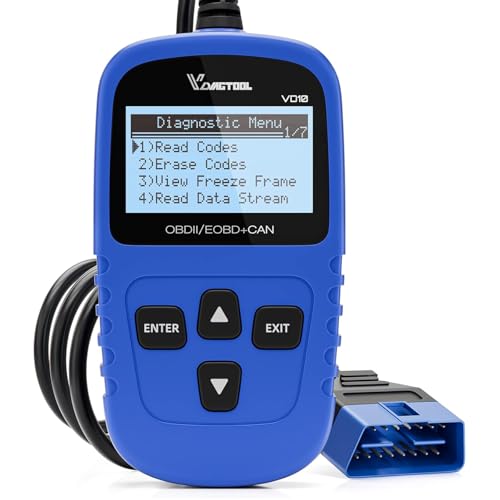
The VD10 is designed for DIYers and hobbyists seeking a simple, reliable diagnostic experience. Attach the scanner to the OBD II port and receive quick fault code readings, clear codes, view live data, and check I/M readiness. It includes a built-in database with definitions for a wide range of generic and manufacturer-specific codes. The user interface emphasizes ease of use, allowing quick interpretation without online searches. This model is particularly useful for those who want a straightforward tool to determine why the MIL is on and to confirm that issues have been resolved after repairs.
MOTOPOWER MP69033 Car OBD2 Scanner

MP69033 from MOTOPOWER offers broad protocol support, including 9 commonly used OBD II protocols for older US-, EU-, and Asian-market vehicles. It presents data on engine speed, calculated load, coolant temperature, vehicle speed, and more through a 2.8-inch LCD screen with backlight for visibility in various lighting conditions. It draws power directly from the vehicle’s OBD II port and does not require an external battery. This scanner suits those who want a balance of comprehensive live data and accessible, easy-to-understand results for everyday vehicle maintenance and troubleshooting.
FOXWELL NT301 OBD2 Scanner

The FOXWELL NT301 provides robust diagnostic capabilities with a focus on reading and clearing DTCs, accessing emissions readiness data, and turning off the check engine light. It includes live data streaming and graphs to visualize sensor behavior, and it can retrieve the vehicle VIN when available. This tool is designed for quick, practical diagnostics and is suitable for professional or DIY use. It does not support ABS, SRS, or other specialized systems, but it delivers core OBD II functionality with straightforward menus, making it a strong option for routine maintenance and routine repairs.
BlueDriver Bluetooth Pro OBDII Scan Tool
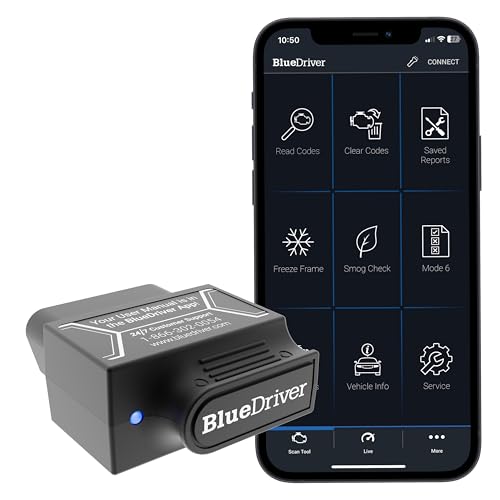
BlueDriver offers a premium, subscription-free experience via mobile app integration on iPhone and Android. It supports reading and clearing codes across a broad range of systems, including ABS, SRS, and TPMS, and provides extensive repair reports with potential causes and fixes. It’s designed to deliver professional-grade diagnostics in a consumer-friendly package, enabling real-time health monitoring and data sharing with technicians. The device emphasizes cloud-based data, long-term vehicle health tracking, and a broad library of issues reported by its user community and ongoing development.
Buying Guide
Key purchase considerations help ensure you select a car diagnostic code reader that fits your needs and vehicle lineup. Consider the following perspectives:
- Vehicle compatibility: Some readers support all OBD II vehicles and CAN networks, while others focus on 1996+ models or specific regions. Confirm compatibility with your car’s make, model year, and market (US, EU, Asia).
- Code library size and definitions: A larger built-in DTC library reduces the need for online lookups. Purely generic codes are fine for basic needs, but more comprehensive systems help pinpoint root causes quickly.
- Live data and graphs: If you troubleshoot intermittently, live sensor data and trend graphs provide valuable insights beyond static codes. Determine how much real-time information you want during diagnosis.
- User interface and display: A clear screen, easy navigation, and readable test data make a big difference in field use. Look for legible fonts, backlight, and intuitive menus.
- Power source and portability: Some scanners draw power from the OBD II port; others include internal batteries or connect to mobile devices. For on-the-go use, a compact, durable design matters.
- Additional features: MIL reset, readiness checks, VIN retrieval, and multi-language support broaden the tool’s usefulness. Some high-end models also offer repair guidance and cloud-based reports.
- Future-proofing: If you plan to keep the tool for years, consider models with broad system coverage and regular firmware updates to handle new vehicles and codes.
In practice, the best choice depends on your use case. For quick checks and routine maintenance, a basic, reliable code reader like the ANCEL AD310 or MOTOPOWER MP69033 offers excellent value. For DIY enthusiasts seeking more data and ease of interpretation, a model with extensive data options and a larger code library—such as BLUE drivers or FOXWELL NT301—may be preferable. Professional users who want in-depth diagnostics, broader system coverage, and repair guidance often benefit from tools like BlueDriver’s app ecosystem or higher-end FOXWELL models. Finally, always verify current vehicle compatibility and firmware updates before purchase to maximize long-term usefulness.