When you’re on the road, keeping devices charged is essential. This guide highlights five reliable car power converters that transform 12V vehicle power into usable AC power and USB charging. Each option supports laptops, tablets, phones, and more, with built-in safety features and cooling to handle long trips or camping. Use the buying guide to compare features like wattage, USB ports, and cooling mechanics to find the best match for your vehicle and devices.
Summary of Selected Products
- BESTEK Power Inverter DC 12V to AC 110V – 300W, dual USB, aluminum housing
- PiSFAU 200W Car Power Inverter with USB-C / USB-A – 2 AC outlets, 4 USB ports
- Pro Chaser 400W Power Inverter – 400W continuous, 800W peak, dual AC, dual USB
- FOVAL 200W Car Power Inverter – 2 AC sockets, 4 USB ports, smart cooling
- EPANEE 400W Power Inverter – 2 AC sockets, PD 65W USB-C, QC 18W, built-in safety
BESTEK Power Inverter 300W With Dual USB
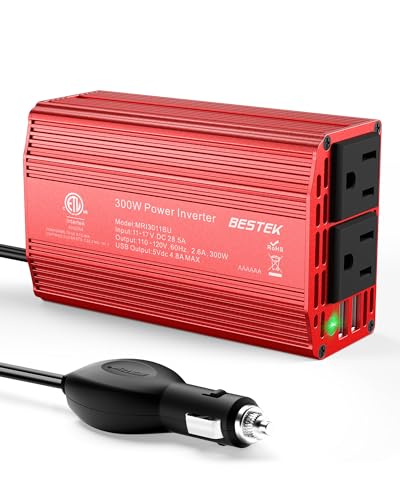
This BESTEK inverter converts 12V DC from a vehicle into 110V AC with 300 watts continuous power and 700 watts peak. It features two 110V outlets and two USB ports (4.8A combined). The aluminum housing provides durability, and the compact, car-friendly design fits under seats or in the glove compartment. It’s compatible with a wide range of devices, including laptops and tablets, making it a versatile choice for road trips and camping. The included 32-inch cigarette lighter plug enhances compatibility with most vehicles.
PiSFAU 200W Car Power Inverter

The PiSFAU 200W inverter provides 12V DC to 110V AC with two US outlets and four USB ports. It emphasizes quiet operation and improved heat dissipation for better efficiency. Its compact, lightweight form (about the size of a cellphone) makes it convenient for travel, camping, or work trips where space is at a premium. It’s designed to power laptops, tablets, phones, and small electronics while reducing noise and heat during use.
Pro Chaser 400W Power Inverter

The Pro Chaser inverter delivers a steady 400W continuous power with an 800W peak, two 110V AC outlets, and dual USB ports for fast charging. It’s well-suited for laptops, tablets, cameras, and small appliances during road trips. A 30-inch cord adds flexibility for placement in vehicles, trunks, or cargo areas. The design emphasizes portability and ease of use, supporting family travel and longer drives where multiple devices require simultaneous charging.
FOVAL 200W Car Power Inverter
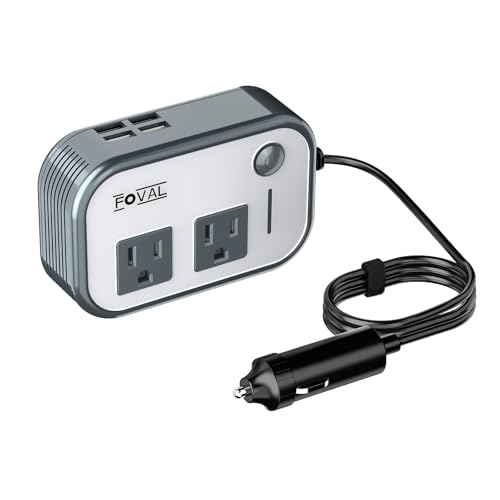
The FOVAL 200W inverter offers two AC outlets and four USB ports. It is compact enough to fit in small spaces and features a smart cooling fan to manage heat, reducing noise and maintaining performance during extended use. The device is designed to charge laptops, tablets, phones, and other USB-powered devices, making it a practical option for road trips, family outings, or emergency power needs.
EPANEE 400W Car Inverter with PD USB-C

The EPANEE 400W inverter includes two 110V AC sockets, a PD 65W USB-C port, and a QC 18W USB-A port. It also features a built-in fuse and a cooling fan for safety and longevity, helping to prevent short circuits and overheating. This model is suitable for charging laptops and power-hungry devices on road trips, camping, or work journeys while maintaining stability through enhanced cooling and protection.
Buying Guide: Key Purchase Considerations
- Wattage and peak power: Choose a model with continuous wattage that matches your devices’ needs and a peak rating to handle short surges (e.g., laptop charging).
- AC outlets vs. USB ports: If you frequently charge laptops or larger devices, prioritize multiple AC outlets. For smartphones and tablets, several USB ports (including USB-C) are beneficial.
- Portability and form factor: Consider the inverter’s size, weight, and whether it fits in your vehicle’s dash, center console, or glove compartment.
- Cooling and noise: A built-in cooling fan can extend inverter life, but check for noise levels if you’ll run it for long periods.
- Safety features: Look for over-voltage, short-circuit, over-temperature, and smart-fuse protection. Auto-shutoff on fault protects both inverter and devices.
- Cable length: Longer cords increase placement flexibility but may add clutter. Ensure the cord length suits your vehicle setup.
- Durability and heat management: Metal housings and good heat dissipation improve longevity, especially during long trips or camping.
- Compatibility: Confirm the inverter output voltage and frequency match your devices and vehicle’s power system.
When evaluating options, balance total wattage with the number of USB ports and the presence of fast-charging standards (USB-C PD, QC 18W). For travelers who power multiple devices or work equipment, a 400W-rated unit with dual USB ports and robust cooling often provides the best mix of capability and reliability. For lighter use, a compact 150–200W model with several USB outputs can handle phones, tablets, and small accessories without bulk.