Are you searching for a reliable car code reader to diagnose check engine lights, monitor emissions, and verify repairs yourself? This guide highlights five leading OBD2 scanners, covering basic code reading to advanced live data and DTC definitions. Each device plugs into the OBDII port, draws power from the vehicle, and helps you quickly identify root causes without costly trips to a mechanic.
Summary of chosen products
| Product | Brand | Key Features |
|---|---|---|
| ANCEL AD310 Classic Enhanced Universal OBD II Scanner | ANCEL | Reads/clears codes, live data, freeze frame, MIL reset; compact & durable |
| MOTOPOWER MP69033 Car OBD2 Scanner | MOTOPOWER | Wide protocol support, LCD display, multiple languages, no battery required |
| FOXWELL NT301 OBD2 Scanner | FOXWELL | Reads DTCs, live data graphing, VIN retrieval; basic, user-friendly |
| VDIAGTOOL VD10 OBD2 Scanner | VDIAGTOOL | DTC lookup, freeze frame, I/M readiness, 3000+ code definitions on TFT |
| ANCEL AD410 Enhanced OBD2 Scanner | ANCEL | Broad OBDII compatibility, extensive DTC lookup, EVAP/O2 testing |
ANCEL AD310 Classic Enhanced Universal OBD II Scanner

The AD310 is a popular, compact OBD II scanner designed for quick check engine light diagnostics. It supports reading and clearing diagnostic trouble codes, displaying live data, freeze frame and memory data, I/M readiness, and vehicle information. It powers directly from the vehicle’s OBDII port—no extra battery or charger needed. The device emphasizes ease of use with clearly labeled buttons and a readable display, making it a practical choice for DIYers and professionals who need fast, reliable results.
MOTOPOWER MP69033 Car OBD2 Scanner

The MP69033 offers broad protocol support across 1996 US-based, 2000 EU-based, and Asian vehicles, with compatibility to newer OBD II and CAN cars. Its built-in DTC lookup helps identify the cause of engine lights, and it provides live data, freeze frame, I/M readiness, vehicle information, and a real-time data curve. An emphasis on a simple, battery-free operation ensures straightforward use without external power sources.
FOXWELL NT301 OBD2 Scanner

The NT301 focuses on essential OE-level data: reading DTCs, emissions readiness status, and live data through graphing. It can turn off the check engine light and retrieve the VIN. It does not cover ABS, SRS, or transmission systems, making it a straightforward choice for basic diagnostics. Accurate fault code reading depends on proper ignition state and vehicle compatibility, with a clear emphasis on user-friendly operation for quick checks and repairs.
VDIAGTOOL VD10 OBD2 Scanner
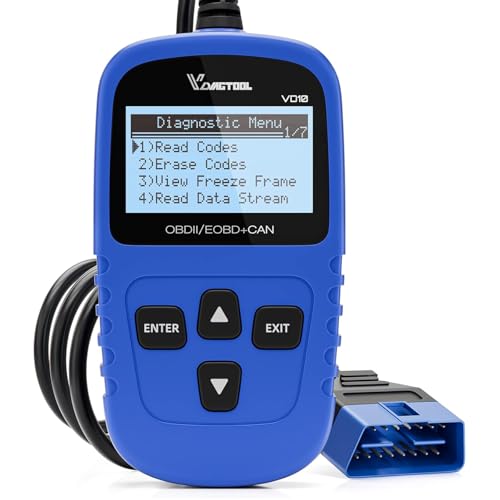
The VD10 positions itself as a DIY-friendly tool with quick code read/clear, live data, freeze frame, I/M readiness, and vehicle information. Its built-in DTC library offers quick definitions for hundreds to thousands of codes. The user interface aims to be approachable for car owners and hobbyists who want a reliable pick-up-and-go scanner for routine maintenance and checks.
ANCEL AD410 Enhanced OBD2 Scanner

The AD410 is designed for broad compatibility with 1996+ vehicles and supports several OBDII protocol families, including CAN, KWP2000, ISO9141, and J1850 variants. It offers a rich DTC library, rapid reading and clearing of emissions-related codes, and advanced diagnostics like EVAP testing and O2 sensor checks. This tool helps professionals and enthusiasts inspect engine health, monitor statistics, and diagnose potential fault areas before pursuing repairs.
WEJOWE OBD2 Scanner Diagnostic Tool

The WEJOWE scanner emphasizes a robust DTC library (over 35,000 definitions) and a wide compatibility range with vehicles manufactured after 1996. It reads and clears codes, shows I/M readiness, and provides live data and vehicle information. It supports multiple languages, aiding users who prefer non-English interfaces, and is designed to help quickly identify root causes without online lookups.
BlueDriver Bluetooth Pro OBDII Scan Tool
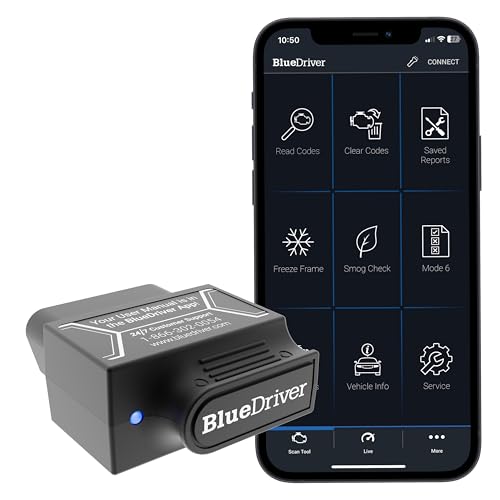
BlueDriver offers a Bluetooth pro OBDII scanner with no subscription fees. It reads and clears trouble codes and supports ABS, SRS, airbag, TPMS, and more. It provides repair reports and live data for ongoing vehicle health monitoring. Mobile connectivity makes it a convenient choice for those who prefer diagnosing on a phone or tablet while on the go.
Buying Guide
Key considerations when choosing a car code reader:
- Vehicle compatibility: Ensure the scanner supports your vehicle’s year, region (US/EU/Asian), and CAN networks. Some devices work well only with 1996+ models, others extend to newer cars and hybrids.
- Functionality: Decide between essential readers (read/clear codes, live data) and advanced tools (VIN retrieval, I/M readiness, EVAP, O2 sensor tests, transmission and ABS/SRS checks, graphing, and DTC lookup depth).
- On-device vs. mobile: Some scanners offer a handheld display; others connect via Bluetooth or Wi‑Fi to a phone or tablet. Consider your preferred workflow and data presentation.
- Power and portability: Battery-free devices powered from the OBDII port reduce clutter, while compact designs improve portability in tight engine bays.
- Ease of use: Look for clear menus, large screens, multilingual support, and built-in DTC libraries to avoid external lookups.
- Data depth and accuracy: A broader DTC library and real-time data can help diagnose complex issues faster but may come with a steeper learning curve.
- Reliability and support: Brand reputation, software updates, and user reviews influence long-term usefulness and accuracy of fault code definitions.
- Limitations: Most scanners cannot perform advanced repairs or reset certain systems after repairs without appropriate conditions; some models do not cover ABS, SRS, or transmission unless explicitly stated.
In selecting a code reader, balance the breadth of features with your typical vehicle list and diagnostic needs. For casual homeowners, a device with broad compatibility and a straightforward interface often suffices. For enthusiasts or professionals, tools with extensive DTC libraries, live data graphs, and deeper system coverage may be more cost-effective in the long run by reducing diagnostic guesswork.