Drag racing demands precise suspension tuning to maximize traction and minimize wheel spin. Double adjustable shocks let you dial in compression and rebound separately, helping you optimize weight transfer, launch stability, and mid-track handling. The following selections are among the most respected double adjustable shocks for drag cars, spanning competition-grade front and rear setups. Use this guide to compare features, compatibility, and tuning options for your race-ready ride.
Summary of chosen products
| Product | Brand | Key Features |
|---|---|---|
| AFCO Racing 3870 Double Adjustable Drag Coil-Over Shock | Afco Racing Products | Twin Tube Eliminator Series; adjustable coil-over shock |
| QA1 DD701 Pair of Proma Star Double Adjustable Coil-Over Shocks | QA1 | 13″ compressed, 19.5″ extended; independent compression and rebound; lightweight aluminum |
| COMP.ENG/MOR Competition Engineering C2600 Front Drag Race Shock | Competition Engineering | 3-way adjustable front shocks; broad vehicle fitment |
| Competition Engineering C2616 Front Drag Race Shock | Competition Engineering | 3-way adjustable; 1988–2000 Chevy Full Size Truck fitment |
| DRAG SHOCKS Premium Ride-Height Adjustable Shocks | DRAG SHOCKS | Nitrogen-charged monotube; ride-height and preload adjustments |
AFCO Racing 3870 Double Adjustable Drag Coil-Over Shock

AFCO’s Twin Tube Eliminator Series 3870 is designed for drag applications where precise tuning matters. The dual adjustable features enable independent control of compression and rebound, helping the racer fine-tune front-end lift, weight transfer, and traction at the launch. This product is positioned as a coil-over setup, integrating shock body and spring for a compact, race-ready package.
Key considerations include how the single shock integrates with your front suspension geometry, the available valving options, and how easy it is to revalve as track conditions shift. For cars requiring quick setup changes between rounds, the 3870’s adjustability can simplify achieving repeatable launches across varying surfaces. Durability and corrosion resistance are also important factors in a drag environment where components face high stresses and repetitive cycles.
QA1 DD701 Pair of Proma Star Double Adjustable Coil-Over Shocks

QA1’s DD701 offers a Proma Star design with independent compression and rebound adjustments, allowing a racer to tailor the split between how the car responds to bump inputs and how it settles after the drone of the initial launch. With a 13″ compressed height and 19.5″ extended height, the unit provides a wide range of ride-height options and mounting compatibility. This model emphasizes lightweight aluminum construction, along with serialized dyno testing and American-made quality, ensuring consistency across events and seasons.
When evaluating this setup, consider the impact of weight distribution on front-end lift and rear traction, as well as the ease of integration with existing coil-over configurations. The DD701’s versatility makes it suitable for various drag vehicles, from street-legal racers to purpose-built rails, provided the mounting points and spring rates are appropriate for your weight and track conditions.
COMP.ENG/MOR Competition Engineering C2600 Front Drag Race Shock

The C2600 front shocks from Competition Engineering are designed to dial in front-end behavior across changing track conditions. As a 3-way adjustable front drag shock, it provides tunable valving to influence initial weight transfer and the downstream ride height as the race progresses. The design philosophy centers on maximizing traction by controlling front-end lift at launch while maintaining control to avoid rear-wheel spin later down the track.
Critical considerations include fitment across GM, Dodge, and Toyota platforms, as well as the availability of compatible rear shocks for a coordinated setup. Racers should assess whether their car’s weight distribution and front suspension geometry align with the C2600’s adjustability to achieve consistent launch behavior and stable mid-to-top-end transitions.
Competition Engineering C2616 Front Drag Race Shock

The C2616 is another front-drag-shock option from Competition Engineering with a 3-way adjustability setup. It’s designed for Chevrolet Full Size Truck models from 1988 to 2000, offering tuning flexibility for different track environments and vehicle configurations. As with other three-way shocks, the emphasis is on balancing initial lift with mid-track stability, helping to manage weight transfer and tire adhesion as the car accelerates toward the quarter mile.
For teams running heavier trucks or street-legal drag vehicles, the C2616 can provide a practical balance of adjustability and durability. It’s important to verify exact fitment and spring rates to ensure the front end remains predictable under launch loads and stays in a controlled ride-height range throughout the run.
Competition Engineering C2705 Rear Drag Race Shock
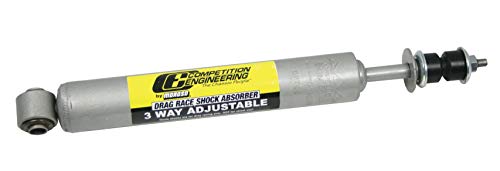
The C2705 rear shock is tailored for classic Chevy II models from 1962 to 1967, offering a three-way adjustable design to help dial-in rear-end behavior during launch and mid-quarter-mile segments. Front-to-rear coordination is key for predictable weight transfer, with rear shocks contributing to the overall stability as launch forces recede and the vehicle tracks through the lanes. The rear unit complements the front shocks to maintain consistent chassis motion across a range of track conditions.
When evaluating rear shocks for drag racing, consider how the entire suspension package behaves under different traction conditions, including track prep, ambient temperature, and tire compound. The C2705’s adjustability can address wheel-hop tendencies and tire slip, but it should be matched with appropriate front-end settings for balanced performance.
Buying Guide
Key purchase considerations
- Vehicle fitment and mounting: Confirm that the shock’s dimensions and mounting hardware align with your car’s geometry and axle configuration. Front shocks require compatible upper mounts and control arms; rear shocks must fit your chassis and coil-overs.
- Adjustability and tuning range: Double-adjustable shocks should offer independent control of compression and rebound. Check the range of adjustment, available valving options, and whether you can revalve for future changes.
- Weight and material: Aluminum bodies are lighter and dissipate heat efficiently, while steel bodies tend to be sturdier under extreme loads. Weight distribution between front and rear can influence launch behavior and tire adhesion.
- Durability and reliability: Drag racing demands repeated, high-stress cycles. Look for corrosion-resistant finishes, robust seals, and shock dyno testing data from the manufacturer.
- Track-specific tuning: Different tracks require different launch settings. A shock with a broad adjustment window makes it easier to optimize for multiple tracks without swapping components.
- Compatibility with existing setup: Ensure the shocks work with your coil-overs, spring rates, and chassis design. Some shocks are best paired with specific coil-over kits or sway characteristics.
Performance considerations
- Front-end lift control: Proper front shock tuning helps maximize weight transfer to the rear tires at the launch, improving traction without unloading the rear wheels too early.
- Rear stability: Rear shocks should minimize wheel hop and maintain tire contact through the mid-to-top end of the sprint for consistent ETs.
- Rebound vs compression balance: In drag racing, a tuned rebound often helps settle the car after launch, while compression governs how quickly the car compresses under load and initial bounce.
Comparative snapshot
- AFCO 3870: Coil-over, independent adjustments; strong option for coil-over racers seeking integrated suspension tuning.
- QA1 DD701: Lightweight, American-made, dyno-tested; robust for various drag setups with dual adjustability.
- Competition Engineering C2600: Front-only, three-way adjustable; versatile across several GM/Dodge/Toyota platforms.
- Competition Engineering C2616: Front, three-way adjustability; specific fitment for 1988–2000 Chevy Full Size Trucks.
- DRAG SHOCKS: Ride-height adjustable, nitrogen-charged; emphasizes overall ride-height control with monotube design.
Choosing the best double adjustable shocks depends on your car’s weight distribution, track conditions, and how much you value front-end lift control versus rear stability. A balanced kit that addresses both front and rear behavior typically yields the most consistent quarter-mile performance, especially across multiple events with varying track prep. Always verify fitment, consult manufacturer fit charts, and consider a professional alignment and setup session to optimize for your specific vehicle and track profile.