Turning a regular bicycle into an electric ride opens up new possibilities for commuting, exploring steep hills, and shortening long trips. This guide reviews five top-rated electric bike conversion kits that work with a variety of frames and riding styles. Each option balances power, ease of installation, and durability, helping you choose the right kit for your needs.
| Product | Brand | Watts | Best For |
|---|---|---|---|
| BAFANG Mid Drive Kit 750W/1000W | BAFANG | 500W/750W/1000W | All-around performance, steep hills |
| LIVALL PikaBoost 2 | LIVALL | 220Wh/158Wh | Rear-wheel, quick install |
| AW Front Wheel Kit | AW | 1000W | Front-hub simplicity |
| VEVOR 1000W Front Wheel Kit | VEVOR | 1000W | High power with display |
| PEXMOR 1200W Front Wheel Kit | PEXMOR | 1200W | High speed and PAS options |
BAFANG Mid Drive Kit 750W/1000W Overview

The BAFANG BBS02B/BBS-HD mid-drive kit is designed to retrofit a wide range of bikes with a bottom bracket from 68 to 73 mm. It supports 500W, 750W, and 1000W configurations, making it versatile for road, mountain, and mixed-terrain bikes. The kit includes essential accessories such as brake levers, chainwheel, throttle, sensor, headlight, and optional LCD display. It is compatible with disc or V-brake setups on chain-driven frames, giving a robust upgrade path for riders seeking more torque and climbing power. The torque ranges from 100 to 160 Nm, enabling strong acceleration and hill performance. With a top speed potential around 28–45 km/h depending on configuration and local laws, it suits riders who want a capable, road-ready e-assist.
Installation can be DIY-friendly for experienced hobbyists, though careful alignment of the bottom bracket and motor mount is essential. The kit’s flexibility allows you to tailor power and components to your bike and riding style, offering a more customized e-bike experience. Consider including the optional LCD display to monitor ride data, battery life, and assist level, especially for longer commutes or tours. Overall, the Bafang mid-drive kit stands out for its torque, adaptability, and broad compatibility with different bikes and setups.
LIVALL PikaBoost 2 Overview

The LIVALL PikaBoost 2 focuses on a rear-wheel conversion with a compact, user-friendly installation. It includes a 220Wh battery option and a longer-range 158Wh option, balanced to deliver around 50–70 kilometers per charge under ideal conditions. The kit emphasizes quick installation on round seatposts (25–35 mm) and emphasizes safety with a multi-layered BMS. A notable feature is the ability to switch between e-bike and standard bicycle modes without removing the unit, providing flexibility for riders who share bikes with others or want to ride manually on occasion. Battery compatibility and charger requirements are important when planning long rides.
Note that LIVALL recommends a 65W USB-C charger and emphasizes installation checks for seatpost compatibility. The PikaBoost 2 aims for a clean setup with minimal wiring and straightforward operation, making it a strong candidate for riders who want a tidy, rear-mounted conversion with reliable battery management and a simple interface for everyday use.
AW Front Wheel Electric Kit Overview
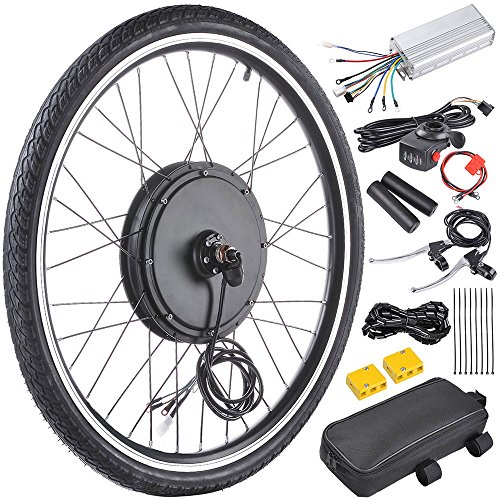
The AW 48V 1000W front-wheel kit provides a simple hub-motor upgrade with a throttle and speed indicators. The kit is designed for 26″ bikes and supports disc or V-brake configurations, making it adaptable for many riders. The aluminum frame contributes to durability while maintaining a lighter overall weight for easier handling during installation and maintenance. The motor’s 1000W output suits urban commuting and short trips with hills, delivering responsive acceleration and a smooth ride. The setup is ideal for riders who want a straightforward, front-hub solution without complex drivetrain modifications.
Pros include a compact motor with a throttle control and a robust frame, which can simplify installation. Potential drawbacks are front-hub weight distribution and steering feel changes, so riders should consider how the front hub affects balance, braking, and handling on unfamiliar terrains.
VEVOR 1000W Front Wheel Kit Overview

The VEVOR 1000W front-wheel kit features a high-power hub motor with a 420 rpm rating and 50 Nm torque, designed for versatile road and light off-road use. It includes an LCD display and PAS, offering real-time ride data and adjustable assistance levels. The kit’s copper-core motor contributes to stable performance and durability in varied weather conditions, while the 26-inch wheel design supports common frame sizes. It targets riders who want significant power with an informative display to monitor speed, battery, and assist levels. The kit is well-suited for riders who prioritize data visibility during commutes or longer rides.
Consider battery capacity and charging options, charger compatibility, and how the motor’s weight impacts overall bike handling, especially on longer climbs or uneven terrain. The front-wheel format makes it a relatively quick upgrade for many bikes, though some riders prefer mid-drive systems for better hill-climbing performance.
PEXMOR 1200W Front Wheel Overview

The PEXMOR 1200W front-wheel kit emphasizes high power with a 3-mode controller, PAS, LCD display, and twist throttle. With a top speed that can approach 36.6 mph (59 km/h) in ideal conditions, this kit targets riders seeking aggressive performance. Compatible with 26″ frames and 100 mm/3.93″ front dropouts, it provides a modern sine-wave-style controller for efficient and quiet operation. The multi-mode controller expands rider choice, enabling a broader range of assist levels and throttle behavior for city commutes or longer sightseeing rides.
Potential considerations include how to manage higher speeds safely, ensure braking performance, and select appropriate battery capacity for the intended use. This kit suits riders who want strong power with flexible control modes, along with an informative display for monitoring ride data and battery status.
Buying Guide: Key Purchase Considerations
- Motor type and placement: Mid-drive kits offer strong torque and better hill climbing but require frame compatibility and more complex installation. Front-wheel kits are simpler to install but may affect steering geometry and braking performance.
- Power and torque: Higher wattage and torque translate to quicker acceleration and steeper climbs but may impact weight, range, and legal speed limits in your area. Choose a configuration that matches local regulations and typical riding terrain.
- Battery and range: Battery capacity (Wh) and chemistry influence range. Consider whether you want a battery included in the kit or a separate purchase, plus charging options and charger compatibility.
- Compatibility and fit: Check bottom bracket size (for mid-drive kits), frame material, dropout spacing, and brake type (disc or V-brake) to ensure a proper fit and safe operation.
- Display and controls: LCD or LED displays help track speed, distance, battery life, and assist levels. PAS modes offer a natural riding experience, while throttles provide instant power when needed.
- Installation effort: Some kits require professional installation, especially mid-drive options. Assess your DIY skill level and tool availability before purchasing.
- Maintenance and warranty: Look for kits with solid parts availability, reputable customer support, and clear warranty terms. This matters for long-term reliability and serviceability.
In summary, selecting the best electric bike conversion kit depends on your riding style, frame compatibility, and how comfortable you are with installation. Mid-drive kits excel in varied terrains and performance, while front- and rear-hub kits offer simpler upgrades and easier maintenance. Review torque, battery options, and compatibility with your bike’s brakes and frame to ensure a safe, efficient, and enjoyable conversion.