Choosing the right electric motor is essential for any car project, from scale models and RC cars to DIY carts and educational builds. This guide highlights five reliable options with varied voltage ranges, speeds, and mounting styles to fit different automotive applications. Each product section includes key specs and practical notes to help you compare performance, compatibility, and durability. Use the buying guide to refine your choice based on your project’s requirements and constraints.
Product Summary
- EUDAX 6 Set DC Motors Kit — 3V–12V, 9000–25000 RPM, versatile hobby kit
- California JOS 6 Pack DC 1.5–3V 15000 RPM — compact, ready-to-use kit with metal mounts
- 10pcs Micro 130 DC Motors — 3V–12V, up to 25000 RPM, metal shell
- 2Pcs RS550 DC Motor Drive Engine — 12V/18V, up to 40000 RPM, high-speed with gear options
- Mudder 20 Pieces Micro Electric Motors — 1.5–3V, up to 23000 RPM, robust for DIY projects
EUDAX 6 Set DC Motors Kit

The EUDAX kit offers six compact DC motors suitable for education, hobby projects, and small vehicle experiments. Voltage range spans 3V to 12V, delivering no-load speeds between 9000 RPM and 25000 RPM with a ±10% tolerance, supporting a wide variety of speeds for different drive trains. The kit notes use caution to avoid short circuits and mentions a shaft diameter of 2 mm and motor body dimensions around 27 mm in diameter and 38 mm in length. A 10×2.0 mm shaft is standard, allowing easy coupling with propellers, gears, and wheels. Random color labeling keeps parts visually distinct during builds.
Practical considerations include the need for proper circuitry to prevent overheating, compatibility with wheel or propeller adapters, and ensuring adequate heat dissipation in longer runs. This set is best for learners or projects needing multiple identical motors with straightforward integration for basic prototyping.
California JOS 6 Pack DC 1.5–3V 15000RPM

The California JOS offering includes six DC motors rated at 3V with a high-speed capability of about 15000 RPM. With a 1.5–3V operating range, these units are designed for small-scale projects, ARDUINO experiments, and toy car builds. Each motor comes with a 10×2 mm shaft and metal mounting hardware, which facilitates quick installation in chassis or framework setups. The kit emphasizes compatible applications across STEM learning, repair, and DIY electronics. Run time depends on battery capacity and load conditions, but the low voltage helps minimize heat generation during short sessions.
Choosing this set is advantageous for compact vehicle builds or prop-driven experiments where multiple motors are needed, and mounting space is limited. Ensure your power source matches the voltage and current demands to avoid excessive draw or overheating.
10pcs Micro 130 DC Motors
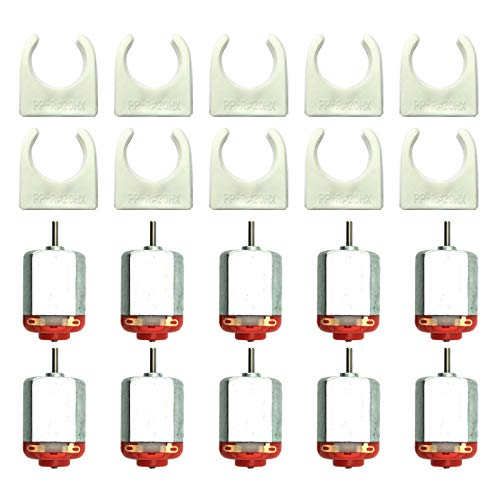
This bundle provides ten micro 130 size motors in a durable metal shell, designed for 3V–12V operation with no-load speeds ranging from 9000 to 25000 RPM (±10%). With a diameter of 27 mm and shaft size 10×2.0 mm, these motors are compact enough for small vehicles, educational kits, or precise motion tasks. The metal housing adds robustness for repetitive use and mounting in tight spaces. The kit is ideal for multiple-drive configurations or parallel experimentation across several small wheel assemblies or actuated components.
Consider these motors if you need identical units for synchronized drives or modular builds. Pay attention to current draw at your chosen voltage to size your power supply and wiring correctly to prevent overheating or voltage drop under load.
2Pcs RS550 DC Motor Drive Engine
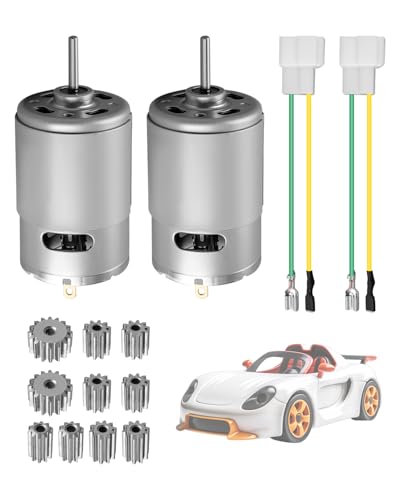
The RS550 motors are high-speed brushed units designed for 12V and 18V operation, offering up to 40,000 RPM for rapid propulsion. This listing includes two motors and a selection of five gear types to accommodate different gearboxes, aiding in torque optimization and speed matching for a range of applications—from ride-on toy upgrades to DIY power tools. The motors are versatile enough to replace components in electric screwdrivers, juicers, and small workshop machines, making them useful for hobbyists who test various drivetrain configurations.
When using RS550 motors, ensure your drive system can handle higher RPM and torque. Gear selection becomes crucial to avoid overloading the power source or the propulsion mechanism. Proper heat management and secure mounting are important for safe operation at higher speeds.
Mudder 20 Pieces Micro Electric Motors

The Mudder set contains twenty micro motors designed for varied voltage ranges from 1.5V to 3V, with a reported rated speed up to 23,000 RPM. The motor bodies are metal, providing durability for sustained use in projects like electric toy cars or classroom demonstrations. They are compact, with a 20 mm diameter, 38 mm length body, and a 10×2.0 mm shaft, making them suitable for dense assemblies or small chassis designs.
This bulk option is useful for large class projects or multi-vehicle builds where consistency and affordability matter. Check the voltage and current requirements for safe operation and ensure your power supply and wiring can support simultaneous operation if using more than one motor at a time.
Buying Guide: Key Purchase Considerations
- Voltage and current: Match motor voltage to your power source. Lower voltages reduce heat but may limit speed; higher voltages boost speed but require capable drivers and heat management.
- RPM and torque: Higher RPM is not always better if torque is insufficient for your load. Consider the gear ratio or motor type (brushed vs. brushless) to achieve the desired acceleration and hill-climbing capability.
- Shaf t size and mounting: Ensure shaft diameter and length fit your wheels, gears, or propellers. Check mounting holes and hardware compatibility with your chassis.
- Durability and cooling: Metal housings often endure more cycles and heat; consider heat sinks, airflow, and enclosure design to prevent overheating during extended runs.
- Form factor: Compact motors save space in tight builds, but may trade power. Larger motors deliver more torque but require bigger mounting spaces and stronger power supplies.
- Gear and compatibility: If your project uses gears or gearboxes, confirm the motor’s gear compatibility or select motors with optional gearheads to tune speed and torque.
- Application scope: For educational kits and DIY experiments, focus on stable performance and ease of assembly. For RC cars or carts, prioritize speed range, current draw, and safety.
- Power source and safety: Use appropriately rated batteries or power modules. Avoid overloading a motor by starting with conservative speeds and gradually increasing as you verify performance.
Across these options, assess whether you need multiple identical motors for synchronized drives, or a mix of speed-torque profiles for different vehicle sections. Consider the intended environment (indoors vs outdoors) and potential wear from debris or moisture, which can impact motor longevity.