Finding the right engine diagnostic code reader helps you quickly identify why the check engine light is on, read live data, and clear trouble codes. This guide reviews five dependable options, spanning classic handheld scanners and Bluetooth-enabled tools. Each product emphasizes ease of use, broad vehicle compatibility, and rapid code retrieval to support DIYers and professionals alike. Below is a summary table of the selected models to compare at a glance.
| Product | Key Strengths | Best For |
|---|---|---|
| ANCEL AD310 Classic | Easy on-the-go use, clear live data, quick code read/clear | Basic, reliable scans for most 1996+ OBD2 vehicles |
| VDIAGTOOL VD10 | Wide compatibility, built-in code library, clear LCD readout | DIYers who want a broad database without online lookups |
| MOTOPOWER MP69033 | Multi-function with real-time data, broad protocol support | Comprehensive data and diagnostics on diverse vehicles |
| ANCEL AD410 Enhanced | Extensive DTC lookup and EVAP/O2 sensor tests | Deep diagnostics for emissions and system-level checks |
| BlueDriver Bluetooth Pro | Professional-grade reports, unlimited repair tips, live data | Smartphone users seeking guidance and ongoing monitoring |
All models discussed here operate through the vehicle’s OBDII port and provide essential features such as reading and clearing codes, viewing live data, and checking readiness for emissions testing. The selection emphasizes devices with straightforward interfaces, solid code libraries, and broad vehicle compatibility to accommodate American cars commonly seen on US roads.
ANCEL AD310: Classic OBD2 Scan Tool

The ANCEL AD310 is a compact, reliable diagnostic tool designed for quick identification of engine trouble codes and emission system faults. It easily reads and clears diagnostic trouble codes, displays freeze-frame data, and shows I/M readiness status. The device draws power directly from the vehicle via the OBDII port, eliminating the need for batteries or external chargers. A sturdy 2.5-foot cable and clearly labeled buttons enhance usability in tight engine bays, making it a practical choice for DIYers and professional mechanics alike. With fast response times and straightforward results, the AD310 supports most 1996 and newer OBDII-compliant vehicles and offers a solid balance of price and performance. Its typical use-case involves rapid code reading when the check engine light comes on and immediate feedback for next steps after repairs.
Key features include:
- Direct power from the vehicle; no battery required
- Clear display and intuitive controls
- Reads and clears emission-related codes; shows live data and freeze frame
- Compact, lightweight design for easy transport
VDIAGTOOL VD10 OBD2 Scanner
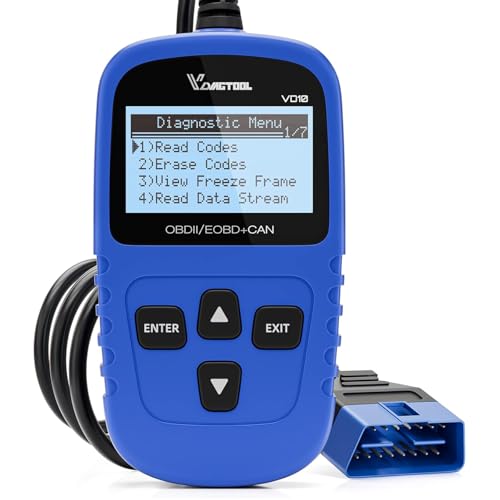
The VD10 is designed for straightforward, reliable engine diagnostics with an emphasis on ease of use for DIYers. It provides essential reads like trouble codes, live data, I/M readiness, and VIN retrieval, plus a built-in DTC library that supports quick interpretation of codes. Its user-friendly interface helps users pinpoint the root cause of the issue without needing internet access. This tool is well-suited for everyday maintenance checks and quick turnarounds for common faults. It shines when homeowners want a dependable scan without a steep learning curve.
Highlights include:
- Ability to read and clear codes; display definitions on-device
- Live data and freeze-frame view for trend analysis
- Extensive DTC library via internal database
- Compact, portable, and battery-free operation
MOTOPOWER MP69033: Versatile OBD2 Scanner

The MP69033 comes with a broad feature set designed for comprehensive diagnostics. It supports all OBD II protocols used by 1996 and newer vehicles and provides real-time data, data flow, and a live graph to visualize sensor behavior. The device reads and erases codes, shows vehicle information, calculates load values, and provides engine metrics like coolant temperature and RPM. It does not require external power, drawing energy from the OBDII port. The ergonomics emphasize a larger display for easy viewing in various lighting conditions, making it suitable for extended sessions or in-shop use.
Key capabilities include:
- Real-time data streaming and graphing
- Wide protocol support for a broad vehicle range
- Onboard diagnostics with I/M readiness and vehicle info
- No external battery needed; powered via OBDII
ANCEL AD410 Enhanced OBD2 Scanner

The AD410 is engineered for robust emissions-focused diagnostics. It provides quick read and clear functionality for fault codes and supports enhanced diagnostics, including O2 sensor testing and EVAP diagnostics. With a large built-in DTC lookup library (over 42,000 codes), it helps users identify faults without external internet searches. It can monitor monitor readiness and perform EVAP system tests, offering a deeper inspection of emissions-related components. This model is best for users who want broader diagnostic capabilities beyond basic code reading.
Notable aspects:
- Extensive DTC library and advanced diagnostics
- EVAP and O2 sensor testing for emissions work
- Powered via OBDII; no extra battery required
- Clear fault code definitions and readiness checks
BlueDriver Bluetooth Pro OBDII Scan Tool
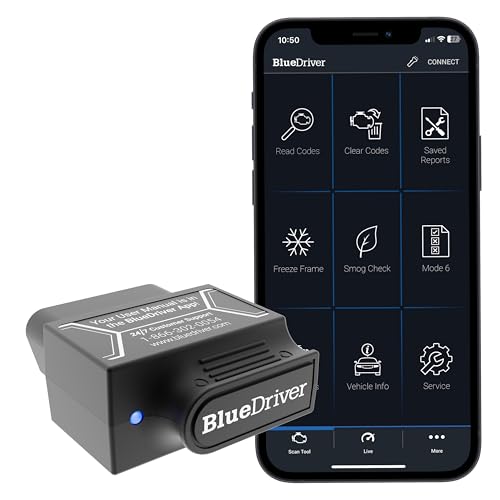
The BlueDriver is a highly capable, subscription-free diagnostic solution that connects via Bluetooth to iPhone or Android devices. It offers comprehensive code reading and clearing, and expands into ABS, SRS, Airbag (TPMS) issues, and more. The platform provides repair reports with possible causes and fixes, along with live data monitoring for ongoing health tracking. This makes BlueDriver a strong choice for users who want a mobile-first experience with enhanced diagnostic depth and actionable guidance.
Key advantages include:
- Expandable, smartphone-based diagnostics with repair tips
- Read and clear a wide range of codes, including ABS and SRS
- Unlimited repair reports and real-time health monitoring
Buying Guide: Key Purchase Considerations
When choosing an engine diagnostic code reader, consider the following factors to align with your needs and vehicle lineup:
- Vehicle compatibility: Ensure the device supports the US-based, 2000 EU-based, and Asian cars you own or service. Check for 1996+ OBDII/CAN compatibility and any manufacturer-specific requirements.
- Code library size and depth: A larger internal database reduces reliance on online lookups. For emissions-focused work, consider models with EVAP and O2 sensor diagnostics.
- Live data and graphs: Real-time data helps diagnose intermittent issues. Graphing features can reveal trends and correlate sensor behavior with fault codes.
- Read/clear capability: Most users need straightforward code reading and clearing, but some scenarios benefit from reset functions for MIL or I/M readiness.
- Power and interface: Handheld units draw power from the vehicle; Bluetooth tools rely on a connected device. Choose based on where you’ll use the tool (garage, driveway, or on-the-go).
- Display and usability: Large, readable screens aid in viewing data under various lighting conditions. Intuitive menus reduce setup time.
- Language support: Multilingual options are helpful for users who engage with technicians or documentation in multiple languages.
- Updates and support: Some tools offer firmware updates or software apps that improve code definitions and features over time.
- Budget and ergonomics: Balance price with build quality, cable length, and portability to fit your workshop or home setup.
In sum, select a model that offers a sound balance of broad compatibility, a robust code library, reliable live data output, and ease of use for your typical maintenance tasks. For smartphone users, a Bluetooth-enabled option like BlueDriver provides ongoing value with repair guidance, while traditional handheld scanners remain reliable for quick, standalone diagnostics on the road.
Note: All product details referenced here come from the listed features and manufacturer descriptions. This guide aims to present objective comparisons to help you make an informed purchase.