Choosing the right fuel line hose matters for performance, safety, and reliability. This guide highlights five well-regarded options that cover common sizes, materials, and use cases—from standard gasoline systems to high-performance setups. Each product emphasizes durability, temperature tolerance, and pressure capability to help you select the best fit for your project.
| Product | Size / ID | Material | Working Pressure | Length |
|---|---|---|---|---|
| 3/8 Inch NBR Fuel Line Hose (10FT) | 3/8″ (10mm) ID | NBR | 300 PSI | 10 ft |
| EVIL ENERGY 3/8″ Fuel Hose (10FT) | 3/8″ (9.5mm) ID | NBR | 300 PSI | 10 ft |
| YAMAKATO 10 ft 1/4″ ID Fuel Line | 1/4″ ID (6.4mm) | Rubber (NBR) | Not for high pressure pumps | 10 ft |
| Shineyoo 5 ft Fuel Line Kit (5 Sizes) | Various: 3/8″, 5/16″, 1/4″, 1/2″, 3/16″ ID | NBR + braided | 300 PSI | 5 ft total (kit) |
| EVIL ENERGY 6AN Braided Fuel Line (20FT) | 6AN (approx 3/8″) | CPE/Nylon braided | 750 PSI | 20 ft |
3/8 Inch NBR Fuel Line Hose, 10FT

Designed for automotive fuel systems, this 3/8-inch ID hose uses premium NBR material to deliver durability, wear resistance, and heat tolerance. With a working temperature range from -40°F to 257°F and a working pressure of 300 PSI, it supports high-performance fuel injection setups. The hose offers a robust 10-foot length and a burst pressure around 1160 PSI, making it suitable for a variety of racing and everyday applications. Its compatibility with diesel, gasoline, and standard fuel types makes it a versatile choice for engine bays and fuel lines that demand reliability.
EVIL ENERGY 3/8″ Fuel Hose, 10FT
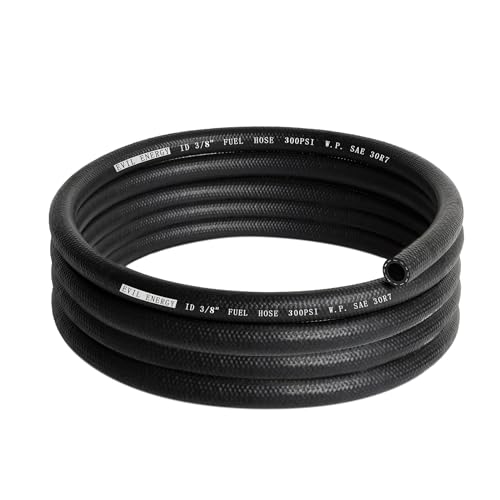
This 3/8-inch ID NBR fuel hose is built for consistent performance under automotive conditions. It features a 3/8″ ID (approximately 9.5 mm) and 17 mm outer diameter, with a minimum bend radius designed for tight engine bays. It supports a working pressure of 300 PSI and a burst rating near 1,200 PSI, with a temperature range of -40°F to 257°F. The hose is compatible with multiple fuels—diesel, oil, gasoline, biodiesel, grease—making it suitable for diverse projects, from street builds to race applications.
YAMAKATO 10 Ft 1/4″ ID Fuel Line

This 1/4-inch ID fuel line is designed for smaller engines, including Kawasaki, Kohler, and Briggs & Stratton powersports equipment and generators. It uses a two-layer, heavy-duty construction with an outer layer that wraps the inner layer for improved durability. It measures 10 feet in length, with a 1/4″ ID and a 7/16″ outer diameter. Note that this is a non-pressurized fuel line intended for lines without fuel pumps. It tolerates a temperature range from -22°F to 338°F and supports ethanol-containing fuels, offering flexibility for various environmental conditions.
Shineyoo Fuel Line Kit, 5 Sizes

The Shineyoo kit provides five common sizes—3/8″, 5/16″, 1/4″, 1/2″, and 3/16″ ID—with 25 clamps included. Made from premium NBR and braided fibers, the hoses offer a 3 mm wall thickness that improves durability and resilience. With a working pressure of 300 PSI and a burst rating around 1200 PSI, this kit covers a wide range of applications, from light-duty repairs to more demanding shop tasks. Temperature tolerance reaches -40°F to 257°F, and the set is designed to save time and effort in projects that require multiple hose sizes.
EVIL ENERGY 6AN Braided Fuel Line (20FT)

This 6AN braided fuel line balances high pressure tolerance with flexibility and durability. It features a CPE rubber inner layer, a 304 stainless-steel wire layer, and a nylon outer braid for added protection. The hose is rated up to 750 PSI working pressure and up to 2,250 PSI bursting pressure, with a broad temperature tolerance from -22°F to 248°F. Compatibility extends to transmission fluids, oil, race gas, vacuum lines, hydraulic fluid, and diesel, making it suitable for performance builds and multi-fluid systems. The 20-foot length provides ample reach for larger installations.
Buying Guide: Key Considerations For Fuel Line Hoses
- Size and compatibility: Identify the correct inner diameter (ID) for your fuel system. Higher-performance engines often require smaller ID hoses, while larger systems may need 5/16″ or 3/8″ lines. Ensure the hose material is compatible with your fuel type (gasoline, diesel, ethanol blends, etc.).
- Material and construction: NBR (nitrile butadiene rubber) hoses are common for fuel lines due to chemical resistance and temperature tolerance. Braided lines with an outer reinforcement offer added durability and abrasion resistance for high-performance setups.
- Pressure ratings: Working pressure (WP) should meet or exceed the system’s operating pressure. Burst pressure indicates safety margin; higher is better for racing or high-load conditions.
- Temperature tolerance: Consider environmental conditions and engine bay heat. Most auto fuel lines handle a wide range, but extreme temperatures may affect performance and lifespan.
- Length and routing: Measure carefully to avoid kinks and ensure proper routing around heat sources, moving components, and sharp bends. Some hoses are labeled non-pressurized or suitable only for specific configurations; follow manufacturer guidance.
- Clamp and fittings: Some kits include clamps; check compatibility with your fittings to prevent leaks. Ensure clamps match the hose ID and material for secure sealing.
- Fuel compatibility: Not all hoses tolerate all fuels equally. If using biodiesel or ethanol blends, verify compatibility to prevent material degradation over time.
- Maintenance and replacement: Fuel hoses can degrade from heat, fuels, and age. Plan for periodic inspection and replacement as part of routine maintenance.
- Safety and certification: For critical fuel lines, choose hoses that meet relevant standards and come from reputable brands to reduce the risk of leaks or failure.
Choosing the right fuel line hose involves balancing size, material, pressure rating, and environmental conditions. The options listed here provide a spectrum of common configurations suitable for everyday vehicles, off-road applications, and performance builds. Always follow manufacturer guidelines and consult a qualified technician if you are unsure about the proper hose for your system.