Transform a standard bicycle into a motorized ride with these top-rated gas engine conversion kits. Each option offers different displacement, power, and durability to fit mountain bikes, road bikes, and hybrids. This guide highlights five reliable kits, focusing on performance, fuel efficiency, and installation practicality to help you compare features side by side.
| Product | Brand | Displacement | Power | Notes |
|---|---|---|---|---|
| CUBELLIN 100cc Bike Motor Kit | CUBELLIN | 100cc | 3.5 HP | 4-stroke, air-cooled, chain drive |
| GOSHET 100cc Bike Engine Kit | GOSHET | 100cc | 3.5 HP | Aluminum housing, large fuel tank |
| Fenjidrop 100cc Chain Type Kit | Fenjidrop | 100cc | 3.5 HP | Air-cooled, robust build |
| Fenjidrop 100cc Belt Type Kit | Fenjidrop | 100cc | 3.5 HP | Chain-free drive option |
| HYYKJ-US 100cc Kit | HYYKJ-US | 100cc | 3 HP | 4-stroke with air cooling |
Note: The table summarizes displacement, power, and build notes across the five options. Actual installation may vary by bicycle frame and components. Always follow manufacturer instructions and local regulations when converting a bike to a motorized vehicle.
CUBELLIN 100cc Bike Motor Kit

The CUBELLIN 100cc Bike Motor Kit is a robust 4-stroke system designed for durable performance on bicycles. Its 3.5 HP output and 3600 RPM max speed aim to deliver strong acceleration up to 50 km/h. The kit emphasizes fuel efficiency with a 0.52-gallon tank and a reported fuel consumption around 0.66 gallons per 100 km, aided by an overhead valve design. Construction uses an aluminum engine shell and a painted iron fuel tank, complemented by a rust-resistant chain and nylon side cover to extend service life. Suitable for riders seeking a solid, mid-displacement conversion with steady performance.
Key features include a compact footprint (11.81 x 5.51 x 5.9 inches), durable materials, and a high load capacity. The kit’s 440-pound max bearing capacity supports varied rider weights and accessories. Installation will require mechanical confidence and adherence to safety guidelines for mounting and chain alignment. Fuel management and regular maintenance are recommended to maintain efficiency and longevity.
YaggeBike 80cc Gas Engine Kit

The YaggeBike 80cc 2-stroke engine kit provides a balance of power and simplicity for upgrading a mountain, road, or cruiser bicycle. This kit includes essential components for a complete DIY conversion, such as a carburetor, ignition coil, fuel tank, muffler, and chain. Built for heat dissipation and long-term durability, the kit aims to deliver strong acceleration and reliable operation while maintaining a manageable weight. A 2-stroke design typically offers simpler maintenance and lighter components, with the trade-off of potentially higher fuel consumption and more frequent maintenance than a 4-stroke system.
Users should anticipate a straightforward installation path but may need mechanical know-how for proper alignment and throttle linkage. Compatibility with 26″ to 28″ wheels makes it a versatile option for riders seeking a relatively quick upgrade. Safety considerations include securing the engine, ensuring frame compatibility, and wearing protective gear during testing and riding.
GOSHET 100cc Gas Engine Kit
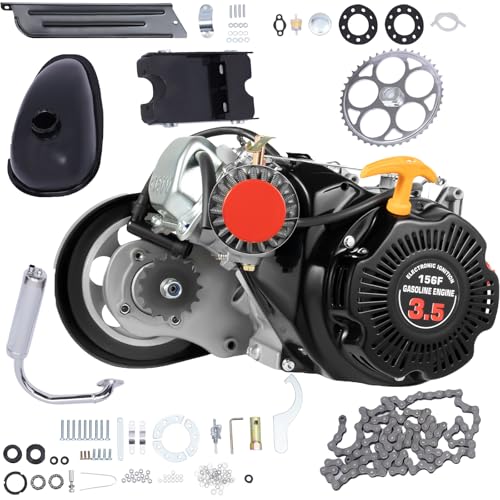
The GOSHET 100cc gas engine kit emphasizes rugged construction and long-term performance. Its aluminum engine housing, a painted iron fuel tank, a 415# steel chain with rust protection, and a nylon side cover contribute to durability and wear resistance. The kit delivers a 3.5 HP output, a 3600 RPM maximum, and a 0.52-gallon fuel capacity for longer rides between refuels. A notable feature is the emphasis on load capacity, with a maximum 440-pound rating, making it suitable for a wide range of rider sizes and loads. This kit targets riders seeking a sturdy, reliable conversion with a focus on longevity.
Considerations include ensuring proper mounting, chain alignment, and air-cooling effectiveness to manage heat during extended use. The kit’s components are designed for robust operation, though installation may require intermediate mechanical skills and careful attention to safety practices to prevent unintended movement or damage during operation.
Ireliajob 80cc Bicycle Engine Kit

The Ireliajob 80cc bicycle engine kit offers a comprehensive set for converting a standard bicycle into a motorized vehicle. With a focus on 26″ to 28″ wheels, it provides compatibility for a wide range of bikes. The kit includes a carburetor, ignition coil, fuel tank, and chain, along with an electric start feature for easier operation compared to manual pull starts. Performance notes indicate a potential top speed around 38 km/h, superior torque for hill climbing, and smoother acceleration. The kit aims to balance ease of use with dependable power for daily commuting and recreational rides.
Potential considerations include whether the electric start system meets your reliability expectations in varying weather, and how installation may affect frame integrity and weight distribution. Users should verify frame clearance and ensure proper legal compliance for motorized bicycle use in their locale.
Upyouths 100CC Full Set

The Upyouths 100CC bicycle engine kit is designed as a full set with robust aluminum, iron, and plastic components. It emphasizes longevity with wear-resistant materials and a 3600 RPM operating range for consistent efficiency. The kit supports a smooth riding experience by focusing on stable power delivery and heat management. Riders can expect a straightforward upgrade path broadening the utility of their daily commute or weekend rides. It is positioned for riders seeking a solid, mid-range 4-stroke motor kit with broad compatibility.
Installation considerations include ensuring a proper chain drive alignment, heat dissipation, and secure mounting to prevent movement during operation. Regular inspection of components and adherence to safety guidelines are essential for reliable operation.
Buying Guide: Key Purchase Considerations
- Engine type: 4-stroke vs. 2-stroke. 4-stroke engines typically offer smoother operation, better fuel efficiency, and longer life, while 2-stroke engines often provide quicker power delivery and lighter weight but may require more frequent maintenance.
- Displacement and power: Higher displacement (e.g., 100cc) generally yields more torque and top speed, but also increases weight and fuel consumption. Match to your riding style and local regulations.
- Fuel capacity and range: Tanks around 0.5 gallons are common; consider your typical ride distance and availability of fuel stations.
- Drive system: Chain drive vs. belt drive. Chains are robust and easier to repair, while belts can offer quieter, lower-maintenance operation but may be less forgiving on misalignment.
- Durability and materials: Aluminum housings, steel chains, and rust-resistant coatings extend life in varied weather conditions.
- Installation complexity: Some kits require significant fabrication, wiring, or frame modifications. Assess your mechanical skill level and whether professional installation is advisable.
- Safety and legality: Motorized bicycles may be subject to local regulations regarding speed, power, and operator licensing. Ensure compliance before riding on public roads.
- Maintenance needs: Regular inspection of the carburetor, ignition system, fuel lines, and exhaust is essential for consistent performance and safety.
- Compatibility: Verify fit for your bike’s wheel size (commonly 26″–28″), frame clearance, and available mounting points before purchasing.