When choosing heat insulation for a car floor, the right material reduces heat transfer, dampens road and engine noise, and protects interior finishes. The options below cover self-adhesive closed-cell foam, aluminum foil finishes, and thick barrier mats designed to withstand high temperatures while staying lightweight. Each product highlights strong thermal barriers and moisture resistance to help keep your cabin more comfortable in hot summers and cold winters. This guide compares five leading insulation mats to help American motorists select the best fit for their vehicle.
| Product | Brand | Coverage | |
|---|---|---|---|
| ALLWIN 394 Mil 10.8 Sqft | ALLWIN | 10.8 sqft | High heat resistance, self-adhesive with waterproof closed-cell foam |
| Siless Liner 157 (4 mm) 36 sqft | Siless | 36 sqft | Closed-cell foam with adhesive; oil and waterproof; aluminum-free option |
| Siless Liner 157 mil (4 mm) 36 sqft Aluminum Foil Finish | Siless | 36 sqft | Aluminum foiled finish for enhanced heat reflection; adhesive-backed |
| Zhengmy 53.9 Sqft Roll | Zhengmy | 53.9 sqft | Large roll with rollers; high-density foam; water/oil resistant |
| Fourub 590 Mil Thick Mat | FOURUB | Not specified as single piece; thick insulation | 15mm thick for strong heat and noise reduction; flame retardant |
Note: Each product below is selected for practical application on car floors, trunks, doors, and hoods with a focus on heat blocking, vibration dampening, and moisture resistance. The descriptions highlight thickness, coverage, and installation compatibility to help you compare at a glance.
ALLWIN 10.8 Sqft Heat Insulation Mat

Product overview: This insulation mat delivers a nominal thickness of 394 mils and covers 10.8 square feet. It is designed to block radiant heat transfer with an estimated efficiency of about 98%. The material features a waterproof, lightweight foam with a highly compressible closed-cell formulation, ensuring it does not absorb moisture or emit odors. Its wide temperature range of -40°F to 300°F makes it suitable for engine bays and cabin floors, providing a thermal barrier that helps keep interiors cooler in summer and warmer in winter. The self-adhesive backing simplifies installation on flat automotive surfaces, including hoods, roofs, doors, and trunks.
Key considerations:
– Coverage is ample for several panels but may require multiple sheets for larger vehicles.
– Excellent moisture resistance reduces odor risks and helps preserve cabin components.
– Aluminum foil finish is optional in certain SKUs; verify finish when purchasing.
Siless Liner 157 (4 mm) 36 Sqft
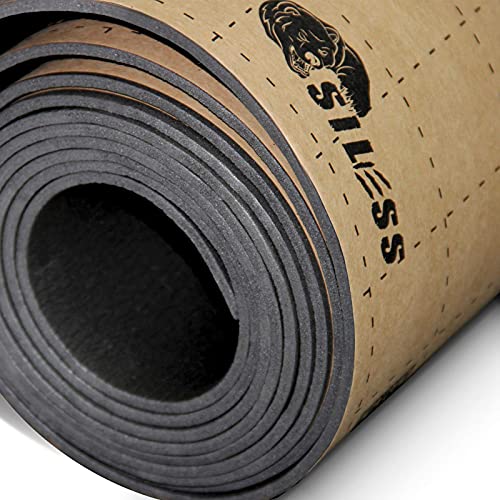
Product overview: This closed-cell polyethylene foam liner includes an adhesive layer for straightforward installation. It blocks radiant heat with an estimated 98% efficiency, offering a durable heat barrier while remaining lightweight. The material is oil- and waterproof, with low risk of moisture absorption and no odor. Its flexible, easy-to-cut nature helps with fitting under seats, in footwells, and along door panels. The 4 mm thickness provides a balance of rigidity and compressibility for multiple car floor contours.
Key considerations:
– Adhesive backing simplifies installation; good for DIY installers.
– Long-term resilience against compression maintains performance.
– Cost efficiency per square foot makes this option attractive for large-area coverage.
Siless Liner 157 Mil Aluminum Foil Finish

Product overview: This variant features an aluminum foil finish on the closed-cell foam to reflect heat more effectively. It retains the same 4 mm thickness and adhesive backing as the non-foil version, delivering a robust thermal barrier with strong moisture resistance. The reflective surface aids in minimizing radiant heat transfer especially from sunlight or engine heat, contributing to a cooler cabin environment. It remains lightweight and flexible for easy installation on irregular floor panels.
Key considerations:
– Aluminum foil finish enhances radiant heat reflection.
– Similar cost-to-coverage ratio as other Siless options, offering value.
– Best for sun-heavy climates or high-heat engines where reflective properties matter.
Zhengmy 53.9 Sqft Roll

Product overview: This roll provides a total of about 53.9 square feet of stickable insulation, with a thickness of 196 mil (approximately 5 mm). The package includes two muffler rollers of different sizes to facilitate installation on larger flat areas and curved surfaces. The foam is high-density to better absorb and dampen vibrations while blocking heat transfer. It is oil- and water-resistant and is designed to reflect and block sun and engine heat, maintaining a comfortable interior temperature over a range of driving conditions.
Key considerations:
– Large coverage suitable for whole floors or multiple panels.
– Foam density supports durable performance under repeated heat cycles.
– Included rollers simplify installation on irregular shapes.
Fourub 590 Mil Thick Car Insulation Mat

Product overview: This mat stands out for its 15 mm (590 mil) thickness, offering substantial thermal blocking and noise reduction. It is designed for high heat resistance and flame retardance, making it suitable for engine bays and under-floor areas where heat transfer is a concern. The material is self-adhesive and waterproof, enabling straightforward installation on floors, doors, trunks, and other flat to mildly curved surfaces. Its thicker profile contributes to a stronger overall barrier against both heat and road noise.
Key considerations:
– Very thick insulation provides strong thermal protection but may require cutting and shaping for tight spots.
– Durable construction supports long-term use in hot climates or with powerful engines.
– Self-adhesive backing reduces installation time and effort.
Buying Guide: Key Purchase Considerations
To choose the best heat insulation for your car floor, consider the following factors from multiple perspectives:
- Heat blocking vs. noise reduction: Some mats emphasize thermal barriers (radiant heat reflection), while others focus more on dampening vibration and road noise. For the quietest cabin, look for multi-layer designs with reflective foil and closed-cell foam cores.
- Material composition: Closed-cell foam is moisture resistant and lightweight, while aluminum foil finishes boost radiant heat reflection. Decide whether you need an aluminum foil finish based on sun exposure and engine heat in your vehicle.
- Thickness and coverage: Thicker mats generally provide better insulation but can be harder to fit into tight spaces. Plan your layout and measure floor areas to determine how many sheets or how much roll you’ll need.
- Adhesive backing and installation: A strong adhesive backing simplifies DIY installation. Ensure surface is clean and dry before application to maximize bond strength and long-term performance.
- Durability and environmental resistance: Look for waterproof, oil-resistant, and temperature-tolerant materials if the insulation may encounter engine fluids or outdoor weather exposure.
- Cost per square foot: For large-area coverage, cheaper per-square-foot options can offer substantial savings, especially with bulky rolls. Balance upfront cost with longevity and resistance features.
- Vehicle type and climate: In hotter climates or vehicles with high-performance engines, maximize radiant heat reflection and moisture resistance to maintain interior comfort and protect interior components.
Implementation tips:
– Prioritize flat surfaces first, then address curves and under-seat areas with scissors or a utility knife for precise cuts.
– Seal edges with extra adhesive for a continuous barrier and to minimize gaps that could let heat seep through.
– For best results, install insulation after removing floor mats and cleaning the surface; allow adhesive to cure as directed by the manufacturer.