When selecting a heavy duty radiator for trucks, durability, compatibility, and cooling efficiency are paramount. This guide highlights five high-performance options designed to withstand demanding hauling and long-haul conditions. Each product prioritizes OEM-style fitment, robust construction, and reliable cooling performance to keep engines operating at optimal temperatures under heavy loads.
Summary of chosen products
| Product | Brand | Core/Size Highlights |
|---|---|---|
| COOLINGBEST 4 Row Aluminum Radiator (Ford F-Series) | COOLINGBEST | Core 18.89″ H x 25.9″ W x 2.44″ T; Overall 29.52″ L |
| Freightliner Columbia Classic Radiator | Eagle | OE-style replacement; heavy duty plastic tanks; multiple Freightliner fits |
| Freightliner FL50/60/70/80 Radiator | Eagle | Core 25″ width; no oil cooler option |
| RadBuild 4 Row Aluminum Radiator (Ford F-Series) | RadBuild | Core 18.90″ x 25.91″; 4-row, TIG-welded |
| Cubauto 4 Row Aluminum Radiator (1968-1972 Chevy/GMC) | Cubauto | 4-core; 100% tested; enhanced cooling capacity |
COOLINGBEST 4 Row Aluminum Radiator For Ford F-Series

Upgrade note: This radiator is designed as an OEM replacement for Ford F100, F150, F250, F350 and Bronco trucks from 1966 to 1979. Core dimensions are 18.89″H x 25.9″W x 2.44″T with an overall length of 29.52″. It includes electrical fan shroud and a thermostat kit to enhance cooling performance under heavy load. The transmission oil cooler spec is listed as φ26x305x1/8-27NPT, aiding engine longevity in demanding conditions. The kit aims to deliver higher coolant capacity and robust welds for improved durability.
Key features:
– OEM replacement compatibility for classic Ford trucks
– 4-row aluminum core for enhanced cooling capacity
– Integrated fan shroud and thermostat kit
– Transmission oil cooler connection
Freightliner Columbia Century Classic Radiator

This radiator is designed for heavy duty Freightliner Columbia and Century Class models, with compatibility spanning 1996-2003 Century Class, 2001-2003 Columbia, and related FLD/Classic XL configurations. It emphasizes OE-style construction and durable plastic tanks. A two-year unlimited mile warranty provides coverage for fitment and reliability, making it a solid option for fleets and individual operators seeking proven replacement parts. Ensure alignment with exact OEM part numbers for proper fit.
Key features:
– OE-style HD plastic tanks (not aluminum)
– Broad Freightliner compatibility across multiple model years
– Two-year, unlimited mile warranty
– Focus on correct OEM alignment for reliable fit
Freightliner FL50/60/70/80 Heavy Duty Radiator

Designed for FL50, FL60, FL70, FL80 series and FS65 Bus Chassis, this radiator variant focuses on compatibility with 1997-2004 Freightliner models and select Ford Sterling Acterra applications. It specifies core height, width, thickness, inlet and outlet dimensions, and clarifies that no oil cooler is included. The radiator is positioned as a direct fit for heavy duty fleets needing a dependable OEM-style part with straightforward installation.
Truck Radiator For Freightliner FLD Series (Classic XL)
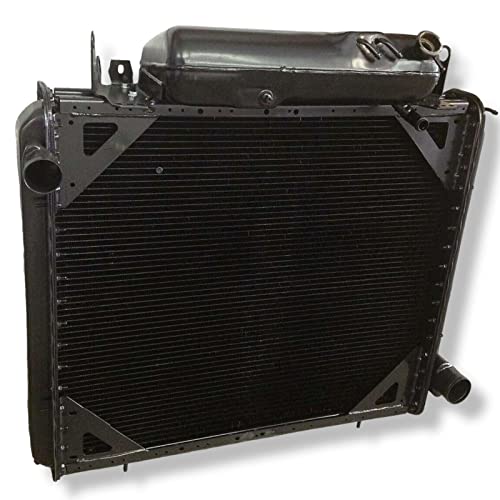
This complete radiator option is tailored for Freightliner FLD 112, FLD 120, and Classic XL models from 1985-1998, including surge tank integration. It’s marketed with OEM-compatible part numbers and a two-year unlimited mile warranty. The emphasis is on full replacement compatibility with classic heavy duty Freightliner configurations, supporting both service and long-haul reliability.
RadBuild CU433 4 Row Aluminum Radiator (Ford F-Series)
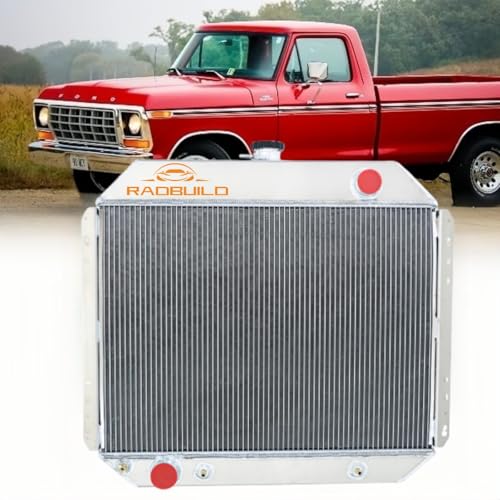
RadBuild CU433 is engineered for 1966-1979 Ford F-Series trucks, including Bronco variants. It features a 4-row aluminum core with TIG-welded construction and no epoxy, offering improved cooling performance by up to 30-45% in some applications. Core size is 18.90″H x 25.91″W x 2.44″T with an overall size around 29.53″L x 26.18″W x 5.51″H. It includes transmission oil cooler specifications and multiple part number variants (CC433, CU433, DPI433, etc.).
Cubauto 4 Row Aluminum Radiator For Classic Chevy/GMC

Cubauto’s 4-row aluminum radiator targets 1968-1972 Chevy C/K trucks and related Blazer/Suburban platforms. It highlights 100% welded construction, vacuum-brazing technique, and a design intended to deliver 35-45% higher cooling capacity than stock radiators. The packaging emphasizes durability, anti-epoxy construction, and comprehensive testing to meet high-performance cooling needs for older classic trucks.
Buying Guide: Key Considerations For Heavy Duty Truck Radiators
- Compatibility: Verify model years, engine type, and OEM part numbers to ensure a proper fit with your specific truck.
- Core design: Four-row vs. three-row cores affect cooling capacity and flow; choose based on engine heat load and driving conditions.
- Material and construction: Aluminum cores with TIG welding generally offer better strength and heat dissipation than epoxy-backed builds; check for leak-tested construction.
- Additional features: Some radiators include fan shrouds, thermostats, or transmission cooler connections—these can simplify installation and improve cooling efficiency.
- Warranty and support: A longer warranty and responsive customer support are valuable for fleet operators and DIY enthusiasts alike.
- Oil cooler options: For certain heavy duties, radiators with integrated or compatible oil cooler lines help maintain engine and transmission temperature under load.
- Installation considerations: Consider mounting space, hose routing, and radiator height/width to ensure clearance with fans, belts, and radiator support.
- Performance vs. cost: High-performance radiators offer better cooling at a potentially higher upfront cost; balance budget with anticipated duty cycle and climate.