For GM LS-based trucks and SUVs from the late 1990s through the early 2010s, upgrading the camshaft is a common path to meaningful gains in torque and throttle response. This article highlights five market-tested truck cam kits designed for 4.8L, 5.3L, 6.0L, and 6.2L engines, including beehive springs and supporting components. Each option is evaluated on cam specs, compatibility, and drivability to help readers compare options without breaking the bank.
| Product | Brand | Approximate Engine Fit |
|---|---|---|
| Texas Speed TSP Chopacabra Cam Kit | Dynosty | LS 4.8–6.2 V8 (1999–2013) |
| BTR Truck Norris Camshaft Kit | BTR Brian Tooley Racing | Gen 3/4 LS Truck (4.8–6.2) |
| LS Stage 2 Truck Camshaft Kit | Cilipnsi | LS V8 4.8–6.2 (1993–2013 Silverado/Sierra) |
| 5.3 LS Norris Camshaft Install Kit | TorquelNova | 4.8–5.3 LS Engines (1999–2013) |
| Stage 2 Cam Kit with .560 Springs | CHOPACAM | LS Truck 4.8–6.2 (1999–2013) |
Texas Speed TSP Chopacabra Cam Kit with Springs Seals Pushrods

The CHOPacabra cam from TSP is engineered for trucks seeking a snarling idle and strong mid-range power. Specs list 214/222 degrees of duration with .550/.550 lift and an 108 LSA, 106 ICL. The kit includes .560 lift beehive springs, valve seals, and OE replacement pushrods. It is designed to work well with LS6 valve springs and a factory torque converter, delivering noticeable gains in power and throttle response without sacrificing daily drivability.
BTR Truck Norris Camshaft Kit with Springs Seals and Pushrods
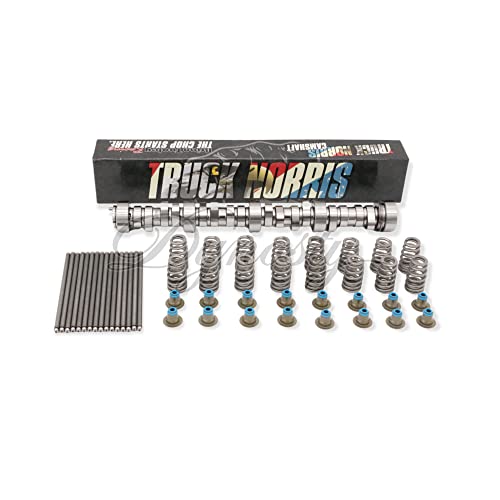
The Truck Norris Camshaft from BTR is built for Gen 3/4 LS trucks with 4.8, 5.3, 6.0, and 6.2L engines. Its 212/22X duration with .552″/.552″ lift and a 107 LSA provides a broad torque curve. BTR emphasizes a strong power bump across the rev range while maintaining reasonable idle and compatibility with stock torque converters. The kit includes springs, seals, pushrods, and lifters for a compact install.
LS Stage 2 Truck Camshaft Kit for Silverado/Sierra

Designed for 1993–2013 GM Silverado and Sierra trucks with Gen 3/4 LS V8s, this kit features a 208/21X duration with .549″/.549″ lift and a 108.5 LSA. It is a direct replacement kit with a 3-bolt pattern, intended to improve power and torque while retaining driveability. The kit emphasizes a balanced combination of performance and everyday usability, including compatibility with the factory torque converter in many builds.
5.3 LS Norris Camshaft Install Kit

TorquelNova’s Norris Cam Install Kit targets 1999–2013 GM Gen 3/4 LS trucks with 4.8, 5.3, and related variants. Key specs include 212/22X duration with .552″/.552″ lift and a 107 LSA, 3-bolt pattern. The package typically bundles cam, gaskets, lifters, and trays, supporting a straightforward upgrade path for a balanced blend of power and daily drivability. VVT-equipped engines may require a VVT delete kit in some builds.
Stage 2 Cam Kit with .560 Lift Beehive Springs

CHOPACAM’s Stage 2 kit emphasizes a balance of aggressive performance and daily drivability for LS trucks. Specs list 214/222 duration with .550/.550 lift and 108 LSA, along with 106 ICL. The kit includes .560 lift beehive springs and seals, designed to be a drop-in upgrade for 4.8–6.2L cathedral-port engines. It targets a strong, recognizable cam sound with a broad torque curve suitable for street-driven applications.
Buying Guide: Key Considerations For LS Truck Cam Upgrades
- Engine compatibility: Confirm your engine displacement and generation (4.8, 5.3, 6.0, 6.2; Gen 3/4) to ensure the cam kit’s lobes, timing, and hardware match your truck.
- Cam specs and drivability: Duration, lift, and LSA affect idle quality, power bands, and fuel economy. A more aggressive cam typically reduces daily drivability unless paired with supporting hardware and tuning.
- Spring and hardware: Beehive springs and included seals, pushrods, and lifters simplify installation and reduce the risk of valvetrain issues. Check compatibility with valve springs and retainers already installed.
- Torque converter compatibility: Some cam kits assume a stock torque converter. If your vehicle has a modified stall or a heavy drivetrain, verify required torque converter compatibility or possible VVT delete needs.
- Fuel and timing tuning: Most cam upgrades require a professional tune or an ECU reflash to optimize timing maps, fueling, and idle stability for best results.
- Cost versus gain: Consider total upgrade cost (cam kit, gaskets, lifters, labor) against expected gains in horsepower and torque across your target RPM range.
- Reliability and warranty: Check warranty terms and the reputation of the brand for long-term reliability, especially for daily-driven trucks.
- Installation considerations: Some kits are designed for direct replacement; others require head or gasket work. Factor in tools, space, and potential engine management changes.
Overall, the listed options provide a spectrum from aggressive performance to balanced, daily-drivable improvements. When selecting, align the cam’s duration and lift with your goals: louder, more aggressive throttle response or broader torque for towing and daily driving. A professional tune will maximize benefits and ensure stability across gears and RPM ranges.