Choosing midrange speakers for a car requires balancing power, durability, and sound quality. The following five options deliver solid midrange performance, handle high output, and fit a variety of install conditions. This guide highlights each model’s strengths, helping you compare how they handle vocals, instruments, and overall balance in a typical car audio setup.
Summary of Selected Products
| Product | Brand | Key Specs | Voice Coil | Impedance |
|---|---|---|---|---|
| ORION Cobalt CM654 | ORION | 1000W Max, 250W RMS, 1.5″ VC | 1.5″ | 4 Ohm |
| DS18 PRO-GM6 | DS18 | 480W Max, 140W RMS, 1.5″ VC | 1.5″ | 8 Ohm |
| Timpano TPT-MR6-4 Bullet | Timpano | 500W Max, 150W RMS, 2.20″ mounting depth | 4 Ohm | 4 Ohm |
| ORION Cobalt CM52 | ORION | 500W Max, 125W RMS, 1.2″ VC | 1.2″ | 2 Ohm |
| RECOIL MS65-4P | RECOIL | 600W Max, 300W RMS, 1.5″ VC | 1.5″ | 4 Ohm |
The products below are arranged to help you compare performance, installation practicality, and voice-coil durability, with a focus on midrange clarity and vocal presence in typical car listening environments.
ORION Cobalt CM654: High Efficiency Midrange Speaker

These pro audio midrange speakers are designed to deliver balanced sound with a wide frequency range. The CM654 emphasizes clarity across midrange content, making vocals and instruments sit cleanly in the mix. A high-temperature voice coil supports durability under demanding listening levels, while the 2.75-inch mounting depth helps with versatile installations. With a high 1000W max power and 250W RMS rating, this model accommodates sustained output without significant distortion, ideal for enthusiasts upgrading vehicle midrange performance.
DS18 PRO-GM6: Premium 6.5″ Midrange
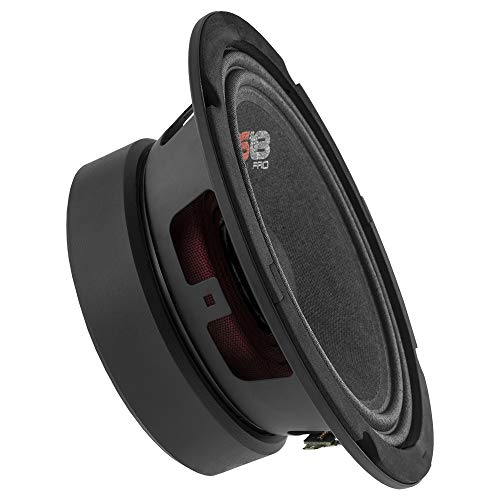
The PRO-GM6 handles the core midrange spectrum—great with instrumentals and even better with vocals. It delivers strong power handling (480W max, 140W RMS at 8 Ohms) and uses a 1.5″ high-temperature Kapton voice coil for extended life in high-heat environments. The robust construction supports reliable performance in car doors and kick panels, offering a balanced, forward midrange presence without overpowering the highs or lows.
Timpano TPT-MR6-4 Bullet 6.5″ Midrange

The TPT-MR6-4 is built for impactful midrange with strong vocal presence. Each driver handles up to 500W max power and 150W RMS at 4 Ohms, designed for loud SPL scenarios. A stamped steel frame and ferrite magnet ensure durability, while a compact 2.20″ mounting depth simplifies installation in shallow door panels. This model aligns with installations aiming for clear vocal definition in loud, full-range car audio setups.
RECOIL MS65-4P 6.5″ Midrange Speaker

RECOIL’s MS65-4P pairs high efficiency midrange design with a robust 1.5″ Kapton voice coil, capable of handling heat while preserving midrange integrity. With 600W max and 300W RMS at 4 Ohms per pair, these speakers offer substantial output for vocal and instrument-rich passages. The design emphasizes midrange clarity and reliability in daily driving, suited for users upgrading their factory setups without sacrificing balance or durability.
Buying Guide: Midrange Car Speaker Considerations
Key factors influence the effectiveness of midrange car speakers. Consider the following perspectives to guide your selection and installation strategy.
- Sound signature: Look for models with a balanced midrange response that preserves vocal clarity without overpowering the highs or bass. A higher efficiency (dB) helps achieve louder output from the same power.
- Power handling: Match the speaker’s RMS rating to your amplifier or head unit capability. Higher RMS in the midrange helps maintain clean, loud vocals and instrument details without distortion.
- Voice coil material and size: Kapton and similar high-temperature coils support longevity in hot door panels. A larger voice coil can contribute to better heat management and authority in the midrange.
- Impedance: Common options include 2 Ohm, 4 Ohm, and 8 Ohm. Lower impedance typically yields higher potential power from an amplifier, but requires compatible electronics and wiring.
- Mounting depth and mounting options: Consider the depth required to install the speaker without interfering with windows or window regulators. Shallow mount options help with tighter door panels.
- Durability and environment: Vehicle interiors present temperature and vibration challenges. Look for robust frames, protective coatings, and reliable grilles to protect the midrange from debris and moisture.
- System-wide balance: Midrange performance should complement tweeters and woofers. Plan a three-way or two-way setup to maintain coherent frequency overlap and avoid unnaturally emphasized mids or highs.
Practical installation tips include using a proper sealed or vented enclosure when applicable, wiring with quality connectors, and configuring an amplifier with appropriate crossovers to ensure the midrange receives the intended frequency band. For most midrange-focused applications, integrating with door panel acoustics and ensuring a secure mounting surface yields the clearest vocal and instrumental performance.