Access fast, reliable vehicle diagnostics with a range of OBD II code readers designed for DIYers and professionals. This guide highlights five popular options, explaining what each tool can do, how it supports you in reading and clearing codes, and which car setups they best serve. Use these tools to diagnose check engine lights, monitor live data, and verify readiness for smog tests.
| Product | Brand | Key Benefit |
|---|---|---|
| ANCEL AD310 Classic Enhanced Universal OBD II Scanner | ANCEL | Simple, fast code reading and clearing; compact for on-the-go use |
| ANCEL AD410 Enhanced OBD2 Scanner | ANCEL | Broad compatibility with 1996+ vehicles; built-in DTC lookups |
| FOXWELL NT301 | FOXWELL | Live data graphs and VIN retrieval; straightforward for basic readers |
| BlueDriver Bluetooth Pro | BlueDriver | Phone-based, extensive code library and repair guidance |
| Autel AL319 | Autel | Plug-and-play with wide vehicle support and user-friendly interface |
ANCEL AD310 Classic Enhanced OBD II Scanner
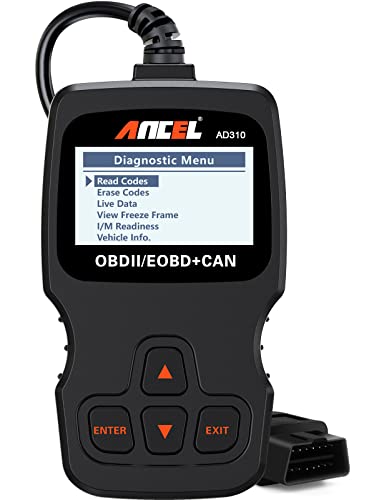
The ANCEL AD310 is a compact, economical OBD II scanner designed to quickly identify and clear engine trouble codes. It supports reading and clearing diagnostic trouble codes, viewing live data, freeze frames, and monitoring readiness metrics. Its 2.5-foot cable and durable build reduce the risk of damage during on-vehicle use, making it a popular pick for everyday maintenance and quick repairs. The device powers directly from the vehicle’s OBDII port, so no extra battery or charger is needed. Its large display presents results clearly for fast interpretation.
Features include comprehensive code reading, emission-related code handling, and memory data access. The AD310 provides fast results after repairs, helping to confirm that the issue is resolved and the MIL is ready to be reset when appropriate. This model is particularly favored by DIYers who value portability and straightforward operation without sacrificing essential functionality.
ANCEL AD410 Enhanced OBD2 Scanner

The AD410 expands on the basics with wide compatibility for 1996+ US, EU, and Asian vehicles, including CAN and several other OBD protocols. It features more than 42,000 built-in DTC lookups to help identify faults quickly, and it can read and clear fault codes, monitor readiness, and provide EVAP and O2 sensor testing capabilities. This model relies on the vehicle’s own power, requiring no battery or charger. It is designed for users who want deeper diagnostic coverage beyond basic engine codes while staying simple to operate.
Note: The AD410 focuses on engine-level diagnostics; it does not support ABS, SRS, or some other systems. Its strength lies in rapid fault-code resolution and robust DTC lookup for efficient maintenance planning.
FOXWELL NT301 OBD2 Scanner

The FOXWELL NT301 focuses on essential OBD2 functions with clear live data streaming and diagnostic capabilities. It can read DTCs, access emissions readiness status, reset the MIL, and retrieve the VIN. Live data graphs help users visualize sensor trends to identify anomalies. This model is ideal for those who need a reliable, no-fruss setup for standard diagnostics and data logging, with a caveat that it does not cover ABS, SRS, or battery-related functions and capabilities beyond basic engine fault reading.
NT301 emphasizes accuracy and usability, offering a straightforward interface and reliable code retrieval across many worldwide vehicles. It is widely used by DIYers and entry-level mechanics who want dependable results without complex software requirements.
BlueDriver Bluetooth Pro OBDII Scan Tool
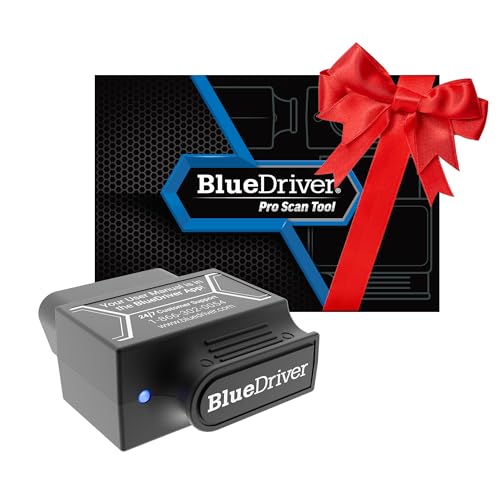
BlueDriver is a Bluetooth-enabled OBD II scanner that works with iPhone and Android devices. It offers extensive code reading and live data capabilities, with the ability to read and clear codes for a broad range of systems including ABS, SRS, Airbag, and TPMS—subject to device compatibility. The app provides unlimited repair reports with potential causes and fixes and offers real-time health monitoring as you drive. It does not require a subscription for core features, making it a popular choice for smartphone-centric diagnostics and ongoing ownership costs.
This tool is tailored for users seeking a robust, app-based experience, comprehensive code definitions, and continuous improvement through software updates. It is particularly advantageous for those who prefer mobile diagnostics and want fixed, long-term access to repair guidance within the same ecosystem.
Autel AL319 Code Reader
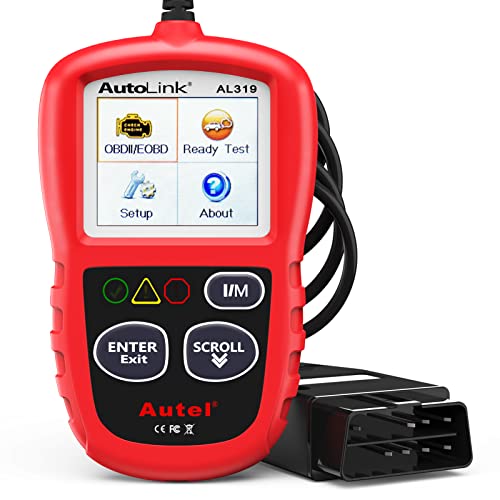
The Autel AL319 provides a user-friendly, plug-and-play experience with broad compatibility for post-1996 OBD II vehicles and multilingual support. It can read and clear DTCs, display live data and freeze frame information, and verify I/M readiness. The interface is designed for end users and DIY enthusiasts, offering straightforward navigation and quick access to diagnostic information. While it doesn’t support every advanced function found in higher-end models, AL319 covers essential checks, making it a solid choice for budget-conscious shoppers seeking reliable engine diagnostics.
Autel’s AL319 is known for its easy setup and clear reporting, allowing users to quickly identify problems and assess vehicle readiness for emissions testing. It suits vehicle owners who want dependable core diagnostic features in a compact, affordable package.
Buying Guide: Key Purchase Considerations
When choosing an OBD II code reader, consider compatibility, scope of diagnostics, and user experience. Here are essential factors to weigh:
- Vehicle compatibility: Confirm the tool supports your make, model year, and any special systems (ABS, SRS, EVAP) you need to inspect. Some tools are engine-focused; others cover multiple systems.
- Code reading and clearing: Most readers can read DTCs and clear them after repairs. Some emphasize MIL reset, while others emphasize code definitions and repair guidance.
- Live data and graphing: For diagnosing sensor issues, a tool that displays real-time data with graphs helps identify abnormal trends quickly.
- Special features: EVAP tests, O2 sensor checks, I/M readiness, VIN retrieval, and repair guidance can add value, especially for ongoing maintenance.
- Interface and usability: Plug-and-play devices with intuitive menus suit DIY users; smartphone-connected tools offer broader data visualization at the cost of app dependence.
- Power source: Some scanners are plug-powered via the OBD port; others include batteries or rely on external power—consider how you’ll use the tool.
- Data library and updates: Tools with extensive DTC databases and ongoing software updates reduce the need to search online for code definitions.
- Budget and support: Balance initial cost with the level of support you expect, including updates, warranties, and documentation.
How To Choose For Your Vehicle
- For casual DIYers: Look for intuitive interfaces, essential functions (read/clear codes, I/M readiness), and reliable live data.
- For weekend mechanics: A tool with broader system coverage (ABS/SRS/EVAP), robust DTC library, and independent code definitions helps more complex repairs.
- For app-centric users: Bluetooth or Wi-Fi scanners paired with detailed repair guidance and scalable data presentation can maximize value over time.
In summary, the best OBD II code reader for you depends on how deeply you want to diagnose, how many vehicle systems you need to inspect, and how you prefer to access data — whether directly on a screen, through a laptop, or via a mobile app. The five models highlighted above provide a spectrum of capabilities to match common needs across American drivers and repair enthusiasts.