Finding a reliable portable air conditioner for vehicles can keep cabin temps comfortable during road trips, camping, or work sites. This guide highlights five top 12V car-friendly units, comparing cooling power, energy use, noise, and installation flexibility. Each option is designed to run off vehicle power or portable batteries, with features tailored to tents, RVs, trucks, and boats. Use the buying tips to choose a model that fits your vehicle size, desired airflow, and power availability.
| Product | Brand | BTU (Cooling / Heating) | Best For |
|---|---|---|---|
| Cybertake Portable Camping Air Conditioner | Cybertake | Cooling 5100 BTU / Heating 6100 BTU | Tents, RVs, small spaces |
| RV Air Conditioner 12V Rooftop (10,000 BTU) | outequip | Cooling 10,000 BTU | RVs, trucks, vans |
| Countrymod 12V DC RV A/C (10,000 BTU) | countrymod | Cooling 10,000 BTU | RVs, trailers, food trucks |
| Libsaerty 12V Under-Dash A/C (22,525 BTU/h) | Libsaerty | Cooling 22,525 BTU/h | Trucks, RVs, forklifts |
| Aspligo 12V Rooftop DC A/C (8,000 BTU) | Aspligo | Cooling 8,000 BTU | Motorhomes, campers, vans |
Cybertake Portable Camping Air Conditioner
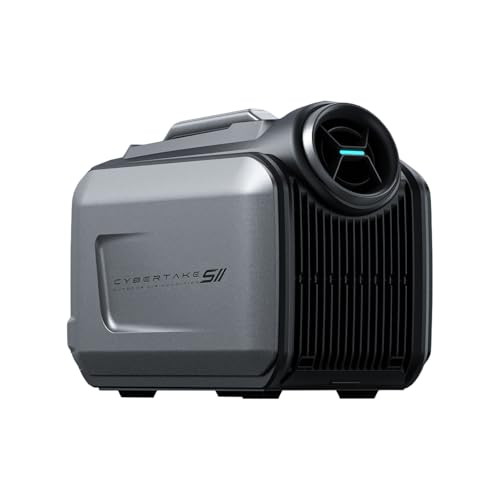
Cybertake’s unit offers flexible power options, including AC wall outlets, 12V/24V car power, or a DC portable power station. It delivers 5100 BTU of cooling and 6100 BTU of heating, suitable for spaces up to about 130 square feet. The Eco+ mode uses minimal energy, and three adjustable fan speeds plus a 0-12 hour timer support precise comfort control. Four modes—Cool, Heat, Dehumidify, and Eco+—let users tailor performance for camping tents, RVs, or cabins, with a broad temperature range to handle variable conditions.
Key features include multi-source power compatibility, a strong heating option for cooler nights, and efficient operation that helps extend battery life during outdoor use. This makes the Cybertake model a strong option for off-grid environments where power flexibility is important.
RV Air Conditioner 12V Rooftop

This 12V rooftop AC from outequip is designed for RVs, trucks, and vans, offering 10,000 BTU of cooling for rapid climate control and a 4,500 BTU PTC heater for supplemental warmth in milder seasons. The unit emphasizes durability and weather resistance, using UV-stabilized ABS materials and a zinc-coated condenser. It’s optimized for quick cooling and dependable operation but note that the heater is supplementary rather than a primary heat source in extreme cold. It’s well-suited for vehicles needing reliable cooling with an option to add warmth when conditions require.
Countrymod 12V DC RV A/C (10,000 BTU)

Countrymod features a 10,000 BTU cooling capacity with inverter design, enabling on-demand cooling and temperature adjustments for comfort. It prides itself on energy efficiency, consuming around 0.3 kWh per hour and offering extended battery life—up to 10 hours. The unit operates quietly (45–55 dB) and distributes cold air evenly to minimize direct blasting. This makes it a practical option for RVs and trailers where quiet operation and energy efficiency are priorities during extended trips.
Libsaerty 12V Under-Dash A/C
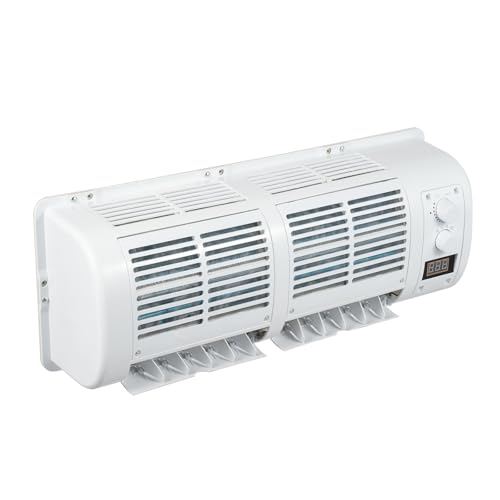
Libsaerty’s under-dash system emphasizes a compact footprint with a substantial cooling capacity of 22,525 BTU/h. The design combines a dual outlet setup and LCD display for easy control, plus a multi-speed fan to tailor airflow within trucks, RVs, or forklifts. The unit is aimed at vehicles needing robust cooling while preserving cabin space, making it a candidate for larger cabs or work trucks where roof or external mounting is impractical. It integrates with vehicle electrical systems for continuous operation and efficient cooling.
Aspligo 12V Rooftop DC A/C (8,000 BTU)

Aspligo delivers an 8,000 BTU rooftop DC A/C with remote control, making it a practical cooling solution for motorhomes and campers. It emphasizes fast cooling for hot summers and remote operation from the driver’s seat. The unit’s size compatibility notes include roof opening requirements, and the package includes a remote for easy temperature adjustment from inside the vehicle. This option suits users prioritizing rooftop installation with straightforward operation and reliable cooling performance.
Buying Guide: Key Purchase Considerations
- Power source flexibility: Look for units that accept car 12V/24V power, cigarette-lighter plugs, or portable power stations. Off-grid camping or remote sites benefit from multiple options.
- Cooling capacity vs. space: Match BTU ratings with your vehicle or tent size. Higher BTU is better for larger cabins; smaller spaces may benefit from portable, lower-BTU models to avoid overcooling and wasted energy.
- Energy efficiency: Inverter or Eco modes can significantly reduce power draw. Consider models with low-wattage operation for longer battery life.
- Noise and comfort: Quieter units make longer trips more comfortable. Target models that specify decibel ranges and use smart airflow distribution to minimize direct blasts.
- Installation and mounting: Rooftop vs. under-dash vs. portable units affect installation complexity. Ensure compatibility with your vehicle’s roof size, dash space, or tent setup.
- Durability and weather resistance: Vehicles and outdoor environments demand materials that withstand heat, moisture, and vibration. Look for UV-stable casings and corrosion-resistant components.
- Auxiliary heating: If you need all-season comfort, consider cooling/heating combinations. Verify heater capacity and whether heating is primary or auxiliary for your climate.
- Maintenance and parts availability: Check warranty terms, replacement parts, and service options. Easy-to-find components reduce downtime on the road.
- Noise tolerance and airflow direction: Equipment with adjustable vents and multiple fan speeds lets occupants customize airflow without creating a loud environment.
Cross-comparing these factors helps identify the best fit for your vehicle type, travel patterns, and power access. For larger campers or commercial fleets, higher BTU, robust durability, and reliable inverter systems may be worth prioritizing. For tents and small trailers, portable units with flexible power options and energy-saving modes may suffice and provide better portability.