When you need clear voice announcements or a commanding siren for emergency, utility, or security work, a car public address (PA) system can be a crucial tool. This guide reviews five strong options that fit typical American vehicle setups, balancing power, ease of installation, and versatility. Each entry includes a quick look at core features to help you compare at a glance, followed by deeper details in the product sections.
| Product | Brand | Key Features |
|---|---|---|
| PA 100-Watt Public Address System | SpeedTech Lights | 100W output, dual horn tones, manual horn toggle |
| Whelen Airhorn Plus PA System | Whelen | 100W airhorn, built-in PA, 12V compatibility |
| Alarm Horn Siren PA Speaker Mic System (BANHAO) | banhao | 7 tones, public-address mic, 12V compatibility |
| Alarm Horn and Microphone System (QDONGLAI) | QDONGLAI | 7-tone siren, mic control panel, 12V compatibility |
| Hisonic HS120B Portable PA | Hisonic | Portable 40W, UHF wireless mics, multi-power options |
PA 100-Watt Public Address System — Dual Horn Speaker

The SpeedTech Lights PA system delivers robust power with a 100-watt output for effective voice announcements and warning signals. It features dual horn tones for distinct alert options and a manual horn toggle for quick function changes from inside the vehicle. This setup is designed to integrate with typical 12V automotive electrical systems, allowing straightforward installation in cars, trucks, or emergency vehicles. As a core public-address solution, it emphasizes audible clarity and reliability for time-sensitive communications.
Whelen Airhorn Plus with Public Address Function

This car PA system blends a powerful 100-watt airhorn tone with a built-in public-address function. A high-gain microphone allows clear voice projection through the siren speaker, and a PA volume knob provides easy adjustments from inside the vehicle. It is designed for universal 12V compatibility, making it suitable for most passenger vehicles and common emergency setups. Its integration flexibility supports wiring to an existing horn switch or a dedicated PA control, enabling rapid deployment during operations requiring both alerts and instructions.
Alarm Horn Siren PA Speaker Mic System — BANHAO

The BANHAO 100W system combines a loud PA with a seven-tone siren and a public-address microphone. It supports 12V vehicles and includes details for straightforward installation. The package highlights durability and long-lasting performance, suitable for emergency, security, or enforcement contexts where rapid audience reach and audible warnings are essential. It is designed for application in cars, trucks, RVs, boats, and other 12V platforms, enabling flexible use in various settings.
Alarm Horn And Microphone System — QDONGLAI

The QDONGLAI system offers seven distinct emergency tones and a user-friendly control panel with six buttons for tone selection and operation. It is designed for 12V vehicles and provides built-in public-address functionality so you can communicate clearly with others while delivering warnings. The configuration supports use in cars, RVs, trucks, boats, and Jeeps, making it a versatile choice for a wide range of road-ready command needs.
Hisonic HS120B Portable PA with Wireless Microphone
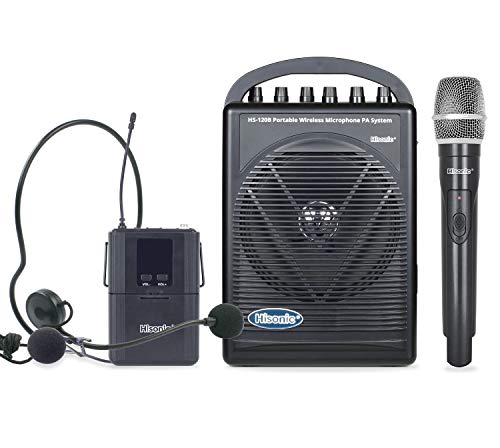
The Hisonic HS120B is a portable public-address system that combines a 6.5-inch, 40-watt speaker with an UHF wireless microphone system. It supports multiple power options, including AC power, 12V DC, and a rechargeable battery lasting up to eight hours. This flexibility makes it suitable for on-the-go announcements, roadside operations, or field work where mobility matters. The system offers straightforward setup and reliable wireless transmission in congested environments.
Buying Guide
- Power and range: A higher wattage generally yields louder output and longer reach. For most cars and light-emergency use, 40–100 watts is common. Consider horn tones and PA loudness needed for your environment.
- Voice clarity: Look for systems with a quality microphone and clear amplification through the speaker. Built-in PA function and adjustable volume help tailor announcements to conditions like wind and traffic.
- Compatibility and installation: Most units in this review run on 12V systems. Check compatibility with your vehicle’s wiring and switch configurations. Some systems offer plug-and-play installation, while others require professional wiring.
- Durability and environment: If the device will be used in harsh conditions or outdoors, prioritize rugged enclosures and weather resistance ratings. This is particularly important for emergency or roadside-service applications.
- Portability vs. fixed install: Portable units add mobility for multi-vehicle operations, but fixed systems tend to provide more power and stable performance. Choose based on whether you need a one-vehicle or multi-vehicle solution.
- Microphone options: Systems may include handheld, belt-pack, or both. A belt-pack or headset approach is advantageous for hands-free operation during tasks requiring movement.
- Legal considerations: Ensure the chosen tones and siren configurations comply with local laws and vehicle codes. Some tones may be restricted in certain states or scenarios.
- Service and support: Consider brands with accessible customer service and readily available replacement parts or accessories in the US market.
In selecting a car PA system, assess how you will use it most: emergency signaling, crowd control, or routine public-address tasks. The five options above cover a spectrum from stationary, high-output alerting to portable, versatile voice amplification. Each system emphasizes audible reach, user-friendly controls, and compatibility with standard vehicle electrical systems, helping you choose a solution that aligns with your operational needs.