Stay cool on the go with portable, solar-ready air conditioners designed for cars, vans, and RVs. This guide highlights five top options that pair with solar charging or offer energy-efficient operation for off-grid adventures. Each product section provides key specs,“cooling power,” and practical considerations for vehicle use in hot climates.
| Product | Brand | Key Benefit | Estimated Cooling |
|---|---|---|---|
| EF ECOFLOW WAVE 3 Portable Air Conditioner | EF ECOFLOW | Cordless, off-grid cooling with built-in battery | 1800W cooling / 6100 BTU |
| EF ECOFLOW WAVE 3 Portable Air Conditioner with Add-on Battery | EF ECOFLOW | Extended runtime with add-on battery option | 1800W cooling / 6100 BTU |
| Dfmyhked 12V Vehicle Air Conditioner | Dfmyhked | 12V compatibility for trucks, RVs, and construction gear | 22,525 BTU/h |
| Zero Breeze Mark 3 Portable Air Conditioner | Zero Breeze | Compact, low-power cooling for small spaces | 1550W / 5280 BTU |
| Countrymod 12V DC RV Air Conditioner | Countrymod | Inverter-based, battery-friendly RV cooling | 11,000 BTU |
Note: All product details reflect features listed by sellers. For off-grid comfort, prioritize models with low energy use, sufficient BTUs for vehicle size, and reliable charging options (AC, solar, or vehicle power). The following sections dive into each option with practical specifics and considerations.
EF ECOFLOW WAVE 3 Portable Air Conditioner

HyperSpeed Climate Control delivers 1800W cooling, offering substantial cooling for compact spaces such as vans and SUVs. The unit claims about 6100 BTU cooling capacity and emphasizes a 75-minute full recharge using its 1000W charging capability. Real-world operation includes app-based monitoring and control, supporting overnight vanlife scenarios. A notable feature is the cordless operation from a 1024Wh LFP battery, enabling roughly eight hours of use, though some setups may require separate battery modules. This model is described as compact for easy vehicle storage and quick deployment in outdoor settings.
Key considerations: Ensure your vehicle or campsite can accommodate a 20″ luggage-sized unit; confirm battery compatibility or availability of the add-on battery option if longer off-grid use is needed; review compatibility with solar charging and the specific charging accessories available for your setup.
EF ECOFLOW WAVE 3 With Add-on Battery

This variant includes the same HyperSpeed cooling and 8-hour cordless running capability, with the added advantage of an optional battery module to extend runtime. The product highlights reiterate 1800W cooling and 2000W heating, enabling comfortable conditions across day and night. The unit remains portable with a 20″ luggage footprint and lightweight design suitable for SUVs or overland setups. Real-time power monitoring via the companion app helps optimize charging and consumption, especially when solar charging is part of the plan.
Key considerations: Confirm the add-on battery is available and compatible with your vehicle’s charging setup; evaluate total system weight and space in the vehicle; consider climate needs (cooling-only vs. heating-capable) for seasonal use.
Dfmyhked 12V Vehicle Air Conditioner
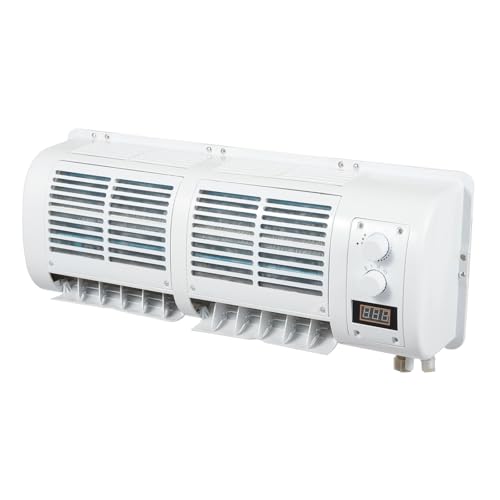
Designed for 12V operation, this unit emphasizes robust cooling capabilities with a claimed 22,525 BTU/h output and a 100W motor. It targets smaller spaces within trucks, forklifts, RVs, and other mobile setups where a direct vehicle power source is available. The unit includes dual adjustable air outlets and a three-speed fan with temperature control, allowing tailored comfort in variable driving conditions. It is positioned as a rugged option with a reinforced ABS shell and a focus on rapid temperature changes in confined areas.
Key considerations: Ensure your power source (12V or auxiliary battery system) can sustain the 100W motor and airflow needs; assess compatibility with existing vehicle ventilation and exhaust constraints; check for installation requirements and mounting stability on the vehicle roof or cabin.
Zero Breeze Mark 3 Portable Air Conditioner
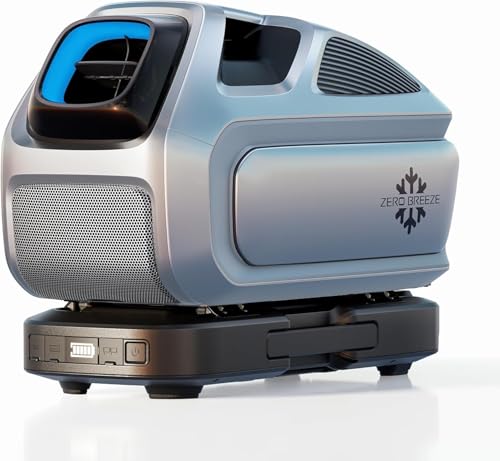
The Mark 3 focuses on portability and efficiency for small spaces, offering a compact form factor at roughly 22 pounds with a suitcase-style design. It supports dual-duct functionality and provides seven operating modes (Rocket, Cool, Sleep, Fan, Dry, Care, Heating). The cooling capacity is listed as 5280 BTU (1550W) with a low-power profile, aiming to minimize energy consumption while still delivering effective cooling. The unit also includes dehumidification and an active drain system to reduce moisture in enclosed environments.
Key considerations: Ideal for smaller vehicles or tents; verify ducting requirements and any need for external power or solar integration; consider climate tolerance for higher humidity areas and the heating option for shoulder seasons.
Countrymod 12V DC RV Air Conditioner

This model offers an 11,000 BTU cooling capacity with a 0.3 kWh per hour energy use profile, designed for inverter-based, 12V DC operation suitable for RVs and trailers. It emphasizes energy efficiency and extended runtime on battery power, with a focus on maintaining comfortable temperatures without excessive power draw. The inverter design helps adapt to variable compressor speeds, improving efficiency and reducing noise while distributing cold air evenly throughout the space.
Key considerations: Confirm inverter compatibility and battery capacity for your RV size; consider installation space, ducting, and compatibility with your vehicle’s electrical system; assess noise levels in relation to comfort and conversation inside the vehicle.
Buying Guide
When selecting a solar-ready or battery-assisted vehicle air conditioner, consider these factors:
- Cooling power vs. space: Match BTU ratings to the vehicle’s interior volume and insulation quality. Higher BTU is not always better if the space is well-insulated.
- Power source compatibility: Look for units with built-in batteries, solar charging compatibility, or easy access to vehicle power (12V) or AC input. Confirm real-world runtimes under typical solar conditions.
- Portability and installation: Evaluate dimensions, weight, and mounting options. A compact footprint helps with storage in smaller vehicles, while secure mounting prevents movement during travel.
- Energy efficiency: Low wattage and inverter-based systems conserve battery life and reduce drain on solar panels or auxiliary power sources.
- Maintenance and durability: Aluminum or reinforced housings, corrosion resistance, and easy filter cleaning extend life in rugged outdoor environments.
- Shipping and warranties: Ensure reliable customer support and coverage for parts, especially for power-related components and battery modules.
These options collectively address a range of vehicle sizes and off-grid needs. For travelers prioritizing maximum off-grid capability, models with add-on batteries or robust solar charging support provide the most flexibility. For smaller vehicles or quick-solution cooling, compact units with efficient power use can still deliver reliable comfort without heavy energy demands.