Finding the right solar panels for a van involves balancing weight, flexibility, and output. This guide reviews five top-rated panels that suit Class B vans, campers, and RVs, highlighting technology like N-Type cells, 16BB busbars, and flexible laminates. Whether you’re extending your off-grid lifestyle or logging weekend trips, these options offer dependable power, shading tolerance, and installation versatility. Read on for concise specs, practical guidance, and a buying guide to help you compare performance, durability, and fit for your van’s roof and battery system.
| Product | Type | Power | Key Tech | Ideal For |
|---|---|---|---|---|
| Callsun N-Type 16BB 200W (2-Pack) | Rigid | 200W (per 2-pack) | N-Type 16BB, Bifacial | Limited roof space, higher output |
| Renogy 200W N-Type 24V | Rigid | 200W | 16BB cells, 24V optimized | Compact van installs, 24V systems |
| HQST 200W 9BB Monocrystalline | Rigid | 200W | 9BB cells, IP65 | All-weather RV setups |
| Renogy Flexible 100W | Flexible | 100W | Ultra-flexible, 240° bend | Curved or uneven van roofs |
| GRECELL UB200 Portable 200W | Portable/Foldable | 200W | Foldable, ETFE, 23.5% eff | Portable backup power & travel kits |
Callsun N-Type 16BB 200W (2-Pack)
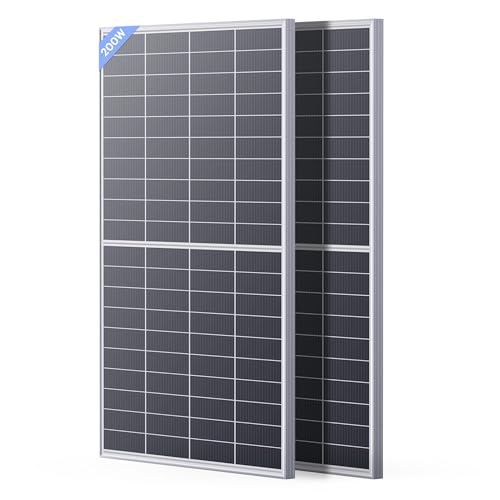
The Callsun 200W panel uses N-Type cells with 16BB busbars to deliver up to 25% efficiency, offering higher output and improved longevity compared with traditional P-type cells. The bifacial design captures light from the rear side, potentially increasing total energy output by up to 30%. Its dual-module parallel arrangement provides shading tolerance—if one half is shaded, the other half continues to generate power. This configuration is especially helpful for van roofs with partial shading from vents or equipment.
Ideal for maximizing sun exposure on compact roofs, the Callsun 2-pack provides flexibility for mounting in tight spaces or side-by-side arrays. The combination of high efficiency and enhanced shading tolerance helps maintain steady power generation in unpredictable RV itineraries. Consider mounting beneath vent louver openings or near skylights where backsheet transparency can contribute to additional output during peak sun hours.
Renogy Solar Panels 200W N-Type 24V

This 200W panel uses N-Type cells and 16BB busbars to optimize efficiency and durability. It’s designed for Class B vans, offering a compact footprint with a 24V output, which helps reduce current loss over longer cable runs and improves charging efficiency for larger battery banks. The 25% cell efficiency enhances energy capture in high-temperature conditions typical of sunny van days. Renogy emphasizes a lighter, smaller form factor compared with earlier full-size panels, making installation easier in tighter van cabins.
Compatibility with both 12V and 24V systems provides installation flexibility, enabling straightforward integration with various battery configurations. The panel’s robust construction and efficient output are well-suited for daily van life, weekend trips, and low-wattage appliances. For best results, pair with a charge controller that supports the 24V input and your battery chemistry to optimize charging cycles and longevity.
HQST 200W 9BB Monocrystalline

HQST’s 200W panel uses Grade A+ 9-busbar mono cells rated up to 25% efficiency, designed to maximize energy conversion and minimize microcracking risk. Its low-light performance benefits from PERC technology, which reflects unused light back into the cell to improve output under cloudy conditions. Built with IP65 protection, it withstands exposure to dust and water spray, making it suitable for RVs exposed to varying climates.
With a focus on space efficiency and straightforward installation, this panel reduces the number of parallel strings and associated cabling. If you’re upgrading an older RV system or adding a second panel for greater daily energy when you’re off the grid, HQST offers a reliable option with solid performance in a compact footprint.
Renogy Flexible 100W

This ultra-flexible panel is designed for curved or irregular van roofs, weighing roughly 70% less than rigid panels. It features a very thin profile—about a tenth of an inch tall when laid flat—making it ideal for stealth installations or rooftops with limited height clearance. The flexible laminate allows mounting on uneven surfaces, and the 240-degree bend tolerance supports unconventional roof shapes.
Its semi-flexible construction with PERC cell tech delivers respectable power for its size, while the lightweight form factor reduces roof loading. The panel is a practical choice for campers with curved roofs, or for retrofits where a rigid panel would require extensive mounting hardware. Note that flexibility can influence long-term durability, so ensure tight, weatherproof mounting to avoid micro-cracks when flexed over time.
Renogy 200W Flexible Solar Panel

Renogy’s 200W flexible panel blends high flexibility with strong output, offering 22% efficiency with a bendable design suitable for curved van roofs. It uses half-cut PERC cells to improve light capture and electrical performance, particularly on non-flat surfaces. The panel is lightweight and can be installed with minimal hardware, making it a strong choice for stealth installs or aesthetic rooftop configurations.
While the flexibility provides mounting versatility, it’s essential to ensure proper sealing and support along the entire panel perimeter to prevent edge delamination. The 240-degree bending capability, combined with the all-black appearance, makes it a popular option for modern campervans seeking a low-profile solar solution.
GRECELL UB200 200W Portable

The GRECELL UB200 is a foldable, portable 200W panel designed for on-the-go use with solar generators or off-grid trips. It features high-efficiency monocrystalline cells rated up to 23.5% and a thin, lightweight build with a folded package around 21.46 x 22.95 x 1.77 inches. It includes multiple kickstands and mounting holes for flexible positioning on roofs or ground setups.
With a weather-resistant ETFE surface and IP65 protection, the UB200 performs well in outdoor environments. It’s especially useful for van life when you want an easily deployable solar option for power banks, portable power stations, or emergency charging. The foldable form enables compact storage when not in use, contributing to a versatile van power strategy.
Buying Guide: Key Purchase Considerations For Van Solar Setups
- Power goals and system size: Calculate daily energy needs by listing essential appliances and expected sun hours. A typical van setup may aim for 200–400W of solar in a compact roof footprint, with a compatible charge controller and battery bank.
- Panel type and mounting: Rigid panels are durable and efficient in fixed installations, while flexible and foldable panels excel on curved roofs or mobile setups. Consider weight, wind load, and mounting hardware compatibility with your roof.
- Cell technology and efficiency: 16BB or larger busbars reduce microcracking and improve shade tolerance. N-Type cells offer higher low-light performance and longevity, while PERC improves light capture in cloudy conditions.
- Voltage and compatibility: Ensure the panel’s voltage aligns with your battery bank and charge controller (12V vs. 24V systems). Higher voltage panels can reduce current and power losses over longer runs.
- Durability and weatherproofing: Look for IP ratings (IP65 or higher) and durable laminates (ETFE) for outdoor exposure, as well as robust junction boxes and mounting points for mobile use.
- Portability vs. fixed installs: Portable panels are great for campers needing temporary charging, while fixed, integrated panels maximize space efficiency for daily van use.
- Warranty and service: Check product warranties, kit inclusions (cables, connectors), and what support is offered if you need installation guidance or spare parts on the road.
- System integration: Plan for a compatible charge controller (MPPT preferred for efficiency), battery chemistry (Lithium vs. AGM), and fuse sizing to protect wiring and components.
- Maintenance: Flexible panels require careful mounting to avoid cracks, while rigid panels need clean surfaces and occasional corner checks for seal integrity.
- Cost-per-watt and value: Compare efficiency, weight, and installation ease. A slightly higher upfront cost may translate into better long-term reliability and daily energy resilience for van life.