Wheel spacers can improve stance, handling, and compatibility for vehicles with aftermarket wheels. This guide highlights five well-regarded spacers, covering hub-centric design, material quality, bolt pattern compatibility, and installation notes. Each option lists key specs and features to help compare fitment across common trucks, SUVs, and sedans.
| Product | Brand | Core Benefit | Bolt Pattern / Bore | Thickness |
|---|---|---|---|---|
| KSP 6X5.5 Wheel Spacers | KSP PERFORMANCE | Hub-centric, 1.5″ spacer for Tacoma/FJ stability | 6×139.7 mm, 106 mm bore | 1.5″ (38 mm) |
| KSP 20mm 5×114.3 Wheel Spacers | KSP PERFORMANCE | Forged, high-strength spacers with 60.1 mm hub | 5×114.3 mm, 60.1 mm bore | 20 mm |
| Orion Motor Tech 5×4.5 Hub Centric | Orion Motor Tech | Hub-centric stability with corrosion-resistant bolts | 5×4.5 in, fits various 4/5-lug wheels | 1.0 in |
| dynofit 2 inch 5×4.5 Spacers | dynofit | Forged 6061-T6 aluminum, CNC machined | 5×114.3 mm, 80.5 mm bore | 2 inches (50.8 mm) |
| YHTAUTO 5×4.5 Hub Centric Spacers | YHTAUTO | Hub-centric design for Ford/Mercury/Explorer range | 5×114.3 mm, 70.5 mm bore | 1.5 inches |
KSP 6X5.5 Wheel Spacers

KSP PERFORMANCE’s 6×5.5 wheel spacers are forged from 6061-T6 aluminum, designed to fit 6×139.7 mm bolt patterns while maintaining a 106 mm hub bore. The 1.5 inch spacer thickness expands wheel clearance, which can enhance stability and brake clearance on compatible trucks. The kit includes four spacers and uses an extended (ET) lug nut approach when original bolts are shorter than 27 mm. A thread-locking compound is included to aid secure fastening. Typical torque guidance is 72-80 ft-lbs. Compatibility spans popular SUVs and trucks including several Toyota and Lexus models; note that locking hubs may prevent fitment on certain setups.
KSP 20mm 5×114.3 Hubcentric Spacers

This kit from KSP PERFORMANCE uses real forged 6061-T6 aluminum spacers with a 60.1 mm hub centric bore, designed for 5×114.3 bolt patterns. The product emphasizes precise CNC machining, heat treatment, and corrosion-resistant bolts. The spacers are sized at 60.1 mm hub bore to fit tightly with minimal clearance, aiming to reduce vibration. It includes four spacers with recommended torque in the 72-80 ft-lbs range. Laser-engraved sizing helps ensure correct identification. Always verify vehicle-specific compatibility before purchase and account for any bolt length needs to avoid interference with wheel studs.
Orion Motor Tech 5×4.5 Hub Centric

Orion Motor Tech offers hub-centric spacers for 5×4.5 patterns, designed to push wheels outward by 1 inch. Made from solid aluminum with Dacromet-coated bolts for corrosion resistance, these spacers emphasize stability and longer service life. The rear face features slots to aid removal and reduce damage during use. The kit suits a wide range of popular American and Asian cars, with emphasis on improved handling and cornering due to increased track width. Installation notes include torque guidance and ensuring hub-centric alignment for best results.
dynofit 2 Inch 5×4.5 Spacers
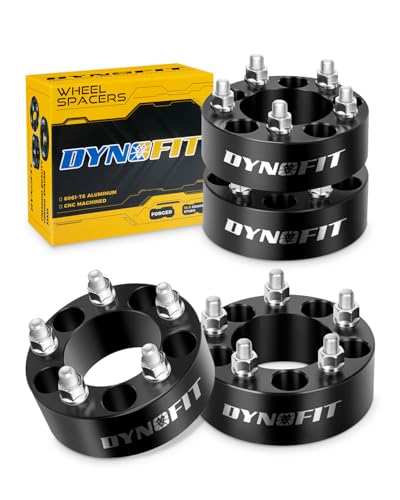
Dynofit spacers are forged from 6061-T6 aluminum, offering strength and durability for 5×114.3 bolt patterns. The 2 inch thickness provides a noticeable track width increase, enhancing stance and stability. The kit includes CNC-machined components for precise fit, along with DACROMET-treated bolts to resist corrosion. With an 80.5 mm hub bore and 1/2″-20 threads, these spacers are suited for a wide array of models, including many Jeep, Ford, and European vehicles. As with all hub-centric spacers, verifying hub bore compatibility and bolt length is essential prior to installation.
YHTAUTO 5×4.5 Hub Centric Spacers

YHTAUTO’s 5×4.5 hub-centric spacers are designed for a wide variety of Ford, Lincoln, Mercury, and related models. With a 70.5 mm hub bore and 1.5 inch thickness, these spacers push wheels outward while maintaining hub alignment. The product notes emphasize proper torque (85-90 ft-lbs) and the use of robust 12.9 grade studs. The hub-centric design helps reduce vibrations and improves overall stability compared to lug-centric alternatives. As always, confirm vehicle compatibility and match the bolt pattern exactly before purchase.
Buying Guide
- Hub-centric vs. lug-centric: Hub-centric spacers align with the wheel hub to minimize vibration. Lug-centric spacers rely on studs for alignment but may require precision in installation and centering rings on some wheels.
- Material and finish: Forged aluminum spacers (e.g., 6061-T6) offer strength with lighter weight and good corrosion resistance. Look for CNC machining quality and anodized or coated bolts for longevity.
- Bore size and bolt pattern: Confirm both the wheel’s bolt pattern (PCD) and the hub bore; mismatches can cause vibrations or improper seating. Some spacers require larger bolt lengths or extended lug nuts.
- Thickness and clearance: Choose spacer thickness based on desired track width increase and brake caliper clearance. Excessive thickness can cause caliper or suspension interference.
- Torque and fasteners: Use manufacturer-recommended torque (commonly around 72–90 ft-lbs for many spacers). Ensure bolts are clean and threads are lubricated as advised.
- Vehicle compatibility: Many spacers list specific model years or regions; verify that your make, model, year, and trim are supported. Note that certain vehicles with locking hubs may not fit some spacers.
- Installation considerations: If original lug bolts are shorter than spacer thickness, extended lug nuts may be required. If bolts protrude beyond the spacer, you might need to trim them, which should be done with caution or by a professional.
- Safety and legality: Spacers can affect vehicle dynamics; ensure installation is performed by someone with wheel-handling experience and check local regulations regarding wheel modifications.
- Long-term use: Periodically re-torque spacers after driving a few hundred miles and inspect for cracks, corrosion, or loosened hardware.