Driving safety and awareness start with accurate speed information. The following speed monitor devices blend GPS and OBD data, delivering real-time speed readings, alerts, and other essential vehicle metrics. Whether you share the road with faster traffic or simply want to avoid speeding tickets, these picks offer clear displays, easy installation, and multi-vehicle compatibility. Below, explore five top options and compare what they bring to your dashboard.
| Product | Display Type | Key Benefit | Tech Angles |
|---|---|---|---|
| Wiiyii OBD2 Gauge Display HUD | OBD + GPS HUD | Overspeed Alarm, multi-interface | OBD2 data, GPS speed, RPM, temp |
| SinoTrack Digital GPS HUD | GPS HUD | Fatigue alert, large 5.5” screen | Overspeed alarm, time/mileage |
| GEARBONE OBD2 HUD | OBD2 Digital HUD | Real-time speed, fault codes | Speed, RPM, temp, diagnostics |
| GUGUMO GPS Digital Speedometer | GPS HUD | Simplified setup, universal compatibility | GPS speed, LED display |
| Docbraces HUD 2025 | GPS HUD | Auto brightness, multi-mode | 6 display modes, 10Hz refresh |
The following sections highlight five strong options for drivers who want quick-glance speed data, safety alerts, and straightforward installation. Each product is assessed on readability, accuracy, alert features, and compatibility with various vehicles. Images and official features come from trusted listings to help you compare at a glance.
Wiiyii OBD2 Gauge Display HUD
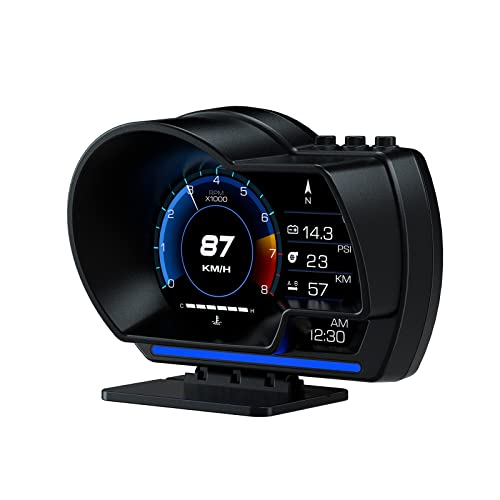
The Wiiyii OBD2 Gauge Display HUD is designed for drivers who want critical data without diverting attention from the road. It offers an adjustable viewing angle so the digital speed can be read at a glance, reducing the need to look down. It supports an over-speed alarm and provides multiple interfaces to switch between LCD meters and data streams. Installation can be dashboard-based or windshield-mounted using an adjustable bracket, and the device reads speed, RPM, water temperature, and more from the vehicle’s OBD2 port and GPS signals. This model is particularly helpful for avoiding traffic violations and maintaining calm driving behavior on busy highways.
Key features include: real-time speed display, multiple interface options, fault code reading, and simple plug-and-play setup. The readability and low-distraction design make it suitable for daily commuting and long road trips alike.
SinoTrack Digital GPS HUD

The SinoTrack GPS HUD centers on a large 5.5-inch display that shows MPH, driving time, mileage, and directional data. Its built-in fatigue and overspeed alerts promote safer driving, and an automatic light-sensing screen adjusts brightness for day and night use. Two distinct speed scales help drivers quickly confirm their velocity, while the GPS integration captures location and route data for review. This unit is well suited for drivers who value a comprehensive overview of trip metrics alongside speed monitoring.
Considerations include: clear alert systems for speeding and fatigue, auto-brightness for readability, and a display that combines maps-like data with speed information to reduce cognitive load while driving.
OBD2 HUD Head Up Display (GEARBONE)

GEARBONE’s OBD2 HUD combines real-time speed, RPM, water temperature, and other key metrics through a direct OBD2 connection. The device supports fault code reading and clearing, making it a practical diagnostic tool for older vehicles with fewer built-in gauges. The digital readouts are designed for quick recognition, and the unit provides a stable, plug-and-play experience with minimal setup. It can be particularly valuable for drivers who want a dependable speed readout alongside engine data for troubleshooting on the road.
Notable aspects include: accurate speed display via OBD2, fault diagnosis capabilities, and a compact form factor suitable for various vehicle cabins.
GUGUMO GPS Digital Speedometer

GUGUMO’s GPS-based speedometer focuses on a streamlined, plug-and-play experience. The system uses high-precision GPS to deliver real-time speed readings and a large LED display for quick visibility. It’s designed to work across a wide range of vehicles, including cars, trucks, motorcycles, and even golf carts. An intelligent power management feature activates the display only when movement is detected, helping to minimize battery drain during idle periods. This option is ideal for drivers who want a simple, reliable speed readout with broad compatibility.
Strengths include: universal vehicle compatibility, direct GPS speed data, and energy-efficient operation with a motion sensor wake-up.
Docbraces HUD Heads Up Display

Docbraces delivers a 2025-era HUD with GPS-backed speed readings and multiple display modes. It includes auto-brightness adjustments, ensuring legibility in bright daylight and low-light night driving. The device supports a 10Hz refresh rate, which helps reduce lag in speed updates, and it aligns with modern dashboards through a USB plug-and-play setup. Six display modes offer customization for drivers who want to tailor the look and feel of speed readouts and directional data.
Key points include: multiple display modes for user preference, smart brightness, and rapid speed data delivery via GPS. This model suits drivers seeking high-visibility information with adaptable interfaces.
Buying Guide
What to consider when choosing a speed monitor
- Data source: OBD2 vs GPS. OBD2 pulls data from the vehicle’s computer, offering speed, RPM, and diagnostics, while GPS HUDs rely on satellite data for speed and location, often with additional trip metrics.
- Display readability: look for large fonts, high-contrast screens, auto-brightness, and an adjustable viewing angle to minimize distraction.
- Alerts and safety features: overspeed alarms, fatigue alerts, and direction indicators can improve safety, especially on long trips.
- Power and installation: plug-and-play devices with dashboard or windshield mounting tend to be easiest. Consider power draw and whether hardwiring is needed for permanent use.
- Vehicle compatibility: ensure the device supports your vehicle’s year, OBD2 port, or GPS requirements. Some units cater to a wide range of cars, trucks, and motorcycles.
- Data reliability: GPS-based devices rely on satellite visibility; OBD2 devices depend on the vehicle’s electrical system. In some cases, combining both data streams yields the most reliable readings.
- Data display customization: users may want multiple display modes (speed only, speed with direction, or full trip data). Ensure the device offers preferred configurations.
From safety-focused alerts to diagnostic capabilities and broad vehicle compatibility, the best speed monitors provide a balance of readability, accuracy, and ease of use. Consider how you drive—daily commuting versus highway trips—and select a model that aligns with your needs for speed awareness, route data, and vehicle diagnostics. If you frequently drive in direct sunlight or at night, prioritize auto-brightness and high-contrast displays. For older vehicles with limited dashboard gauges, OBD2-enabled HUDs offer enhanced visibility and fault-reading capabilities. Finally, assess maintenance needs, like firmware updates and availability of satellite data in your region, to ensure long-term utility.