Choosing the right sway control solution can dramatically improve stability when towing a camper. This guide highlights five proven products that help reduce trailer sway, improve handling in wind and passing traffic, and provide reliable performance across a range of hitch setups. Each option balances ease of use, adjustability, and durability to accommodate different campers and road conditions.
| Product | Brand | Key Benefit | Estimated Ease Of Use |
|---|---|---|---|
| REESE Pro-series 83660 | Pro-series | Friction sway control for adjustable stability | High |
| CURT 17200 Trailer Anti-Sway Bar | CURT | Brake-pad style sway restraint, versatile compatibility | High |
| Camco Eaz-Lift 48380 | Camco | On/off control with double friction pads | Medium-High |
| CURT 17063 Round Bar WDH | CURT | Integrated sway control with lubrication for smooth towing | High |
| Reese 49912 Pro Round Bar WDH | Reese | Comprehensive sway control with complete kit | High |
The products below are organized to help you compare installation needs, adjustment options, and overall stability performance. Each section includes a quick snapshot of what makes the model effective for camper towing in American road conditions.
REESE Pro-Series Friction Sway Control

The Reese Pro-Series Friction Sway Control is designed to resist trailer sway by applying adjustable friction behind the towing setup. It is focused on improving towing stability without complex tools. The friction mechanism allows customization to match trailer weight and road conditions, delivering a smoother towing experience. Quick installation is possible with two spring locking pins, enabling fast setup and removal when not in use.
CURT 17200 Trailer Anti-Sway Bar

The CURT 17200 kit offers improved control by limiting lateral trailer movement using a brake pad type material to deter sway. It’s versatile enough to work with a wide range of weight distribution hitches, including nearly all CURT versions, and on most A-frame trailers. The sway bar is highly adjustable via a simple hex nut toggle to tailor the level of sway restriction to different loads and road conditions.
Camco Eaz-Lift Camper/Sway Control

Camco’s Eaz-Lift system provides safer, easier towing by minimizing sway from passing trucks and gusty winds. It offers an adjustable sway control that can be turned off in hazardous or icy conditions and is compatible with Eaz-Lift weight distribution hitches featuring adjustable sway control. The design uses double friction pads for constant sway reduction and is sized for quick attachment and removal for RV storage.
CURT 17063 Round Bar WDH with Sway Control
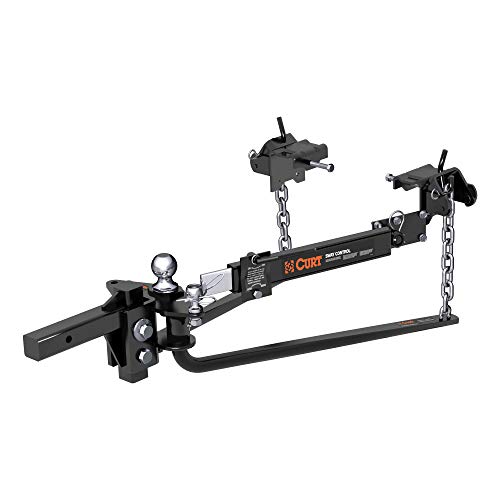
This weight distribution hitch includes a sway control bar and continuous lubrication via grease fittings for smooth, quiet towing. It distributes tongue weight across the vehicle-trailer combination, leveling the load and improving stability. It’s built from forged steel with a robust head, designed to tow between 10,000 and 14,000 pounds gross trailer weight, offering long-term durability and reliable sway management.
Reese Pro Round Bar WDH With Sway Control

The Reese 49912 Pro Round Bar Weight Distribution Hitch with Sway Control provides a complete kit designed to evenly distribute weight and reduce trailer sway for improved stability, ride control, and security. It includes a head with a preinstalled 2-5/16-inch hitch ball, tapered spring bars, an 8.5-inch drop shank, control brackets, a lift-assist bar, and all hardware needed for straightforward installation. The high-strength steel construction enhances durability and long-term performance.
VEVOR Sway Control Weight Distribution Hitch

VEVOR’s weight distribution hitch emphasizes four-way dynamic stability and all-weather reliability. It uses a four-way stability system to neutralize inertia forces from multiple directions, helping to minimize sway during turns and lane changes. The system redistributes weight to improve braking response and reduce bumper load, contributing to steadier towing across varying road conditions and weather.
Buying Guide: Key Purchase Considerations And Comparisons
When selecting sway control for a camper, consider these dimensions to ensure a choice that fits your setup and driving needs:
- Trailer weight and tongue weight: Verify the hitch’s weight rating and ensure it matches your camper’s weight distribution. Higher-capacity hitches handle heavier loads with more predictable sway reduction.
- Compatibility: Check compatibility with your existing hitch system (weight distribution, A-frame vs. frame-mounted, pin types, lubrication needs) to avoid fit issues.
- Adjustment range: A wider adjustment range provides better tailoring to road conditions, wind, and speed. Some models offer on/off controls for varying driving conditions on the fly.
- Lubrication and maintenance: Hitches with integrated lubrication or robust materials require less frequent maintenance but still need periodic checks for wear and corrosion protection.
- Ease of installation and removal: If you tow seasonally or swap vehicles, consider models that install and remove quickly with minimal tools and inline hardware adjustments.
- Durability and weather resistance: Look for reinforced steel components and protective finishes to resist road salt, moisture, and temperature changes typical in the American climate.
- Maintenance accessibility: Some systems provide easier access to greasing fittings or adjustment points, which can save time during setup or inspection.
Practical considerations include how often you tow, the typical road environment (high crosswinds, vehicle speeds on highways), and whether you prefer a friction-based system or a mechanical sway-damping bar. Friction-based devices generally offer straightforward adjustment and strong sway resistance, while integrated sway bars and lubrication-enabled designs emphasize long-term durability and smoother operation with heavy loads.