The tire bead seater market offers a range of high-pressure inflators designed to seat beads on rims quickly and safely. This guide highlights five top options, covering different capacities, pressures, and ergonomics to help you choose the right tool for cars, trucks, ATVs, tractors, and more. Each product section includes core features and practical use notes to support informed comparisons for American workshops and DIY enthusiasts.
| Product | Capacity | Max Pressure | Key Benefit | |
|---|---|---|---|---|
| VEVOR Tire Bead Seater 5 Gal | 5 gal | 145 PSI | Cars, Trucks, ATVs, Tractors | High capacity; robust construction |
| VEVOR Tire Seater 2.1 Gal | 2.1 gal | 120 PSI | Motorcycles, Cars, Light Trucks | Portable and precise; easy handling |
| XtremepowerUS Tire Bead Seater 12L | 12 L | 116 PSI | Cars, ATVs, RVs | Built-in piston valve; compact |
| TOOLUXE 5 Gal Bead Seater | 5 gal | 145 PSI | All-terrain vehicles, commercial trucks | CE approved; clear gauge |
| BLACKHORSE-RACING 5 Gal Bead Seater | 5 gal | 145 PSI | ATVs, Trucks | Simple gauge and on/off control |
VEVOR Tire Bead Seater 5 Gal — High Capacity Bead Blaster

The VEVOR 5 gallon bead seater is designed for larger tires and heavier workloads. It supports up to 145 PSI and holds 19 liters (5 gallons) of air, making it suitable for tires up to about 24.5 inches on cars, trucks, ATVs, and tractors. The operating pressure is adjustable between 85-116 PSI to match tire size. It features a robust aluminum alloy tank with integrated molding and a corrosion-resistant spray coating. Quick seating is possible, often in less than a second after activation. Safety notes include the recommendation to use ear and eye protection during operation.
Key features include a precise operating range, rugged construction, and a tightly welded exhaust valve for airtight performance. The tool is designed to resist rust and corrosion, ensuring durability under regular workshop use. Ideal for professional garages and serious DIYers who regularly handle large tires or fleet maintenance.
Pros
- High capacity and 145 PSI max reach
- Durable aluminum alloy build
- Wide tire compatibility up to 24.5 inches
Cons
- May require more storage space
- Heavier than smaller handheld units
VEVOR Tire Seater 2.1 Gal — Portable Bead Blaster

This compact VEVOR bead seater provides effective bead seating with a 2.1-gallon capacity and a maximum 120 PSI. The unit is designed for tires up to 22.5 inches, covering motorcycles, cars, light trucks, and some commercial vehicles. The pressure range is adjustable from 85 to 116 PSI, allowing users to tailor inflation to the tire’s specifications. Its ergonomic design includes a push-button switch and a non-slip grip, aiding stable operation and precise alignment between the wheel hub and tire bead. A large exhaust valve improves flow efficiency and reduces resistance.
Practical considerations include its portability, making it a good option for mobile repairs or small workshops. The device infers quick seating times, generally under a second once activated, though safety measures such as eye and ear protection are advised during use.
Pros
- Compact and portable
- Ergonomic and easy to use
- Adequate for most cars and light trucks
Cons
- Limited capacity compared with 5-gallon models
TUFFIOM 2.1 Gallon Bead Seater with Gauge
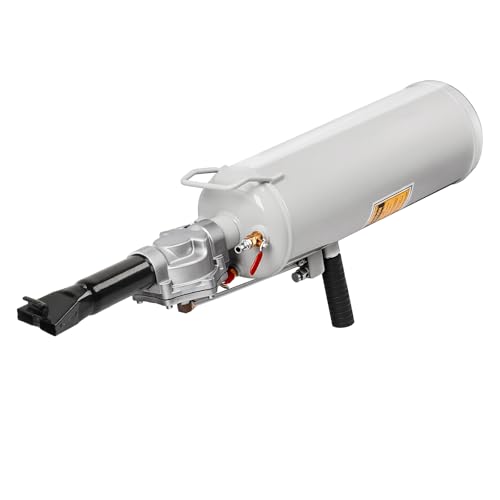
The TUFFIOM 2.1-gallon bead seater combines a built-in pressure gauge with a trigger-style operation and a comfortable handle. Operating pressure ranges from 87-116 PSI, suitable for a wide range of vehicle tires. The device includes a safety valve that releases pressure automatically if it exceeds the limit, enhancing user safety during high-pressure seating. A long neck tube keeps the operator at a safe distance, and the unit’s compact design makes it practical for garages and mobile setups.
Practical considerations include the need for eye and ear protection during operation and the importance of correct lip placement between tire bead and wheel rim for successful seating. The unit’s gauge helps ensure accurate reading, and its safety valve provides an extra layer of protection during high-pressure use.
Pros
- Integrated gauge for precise pressure
- Long neck tube for safer operation
- Nice balance of size and power
Cons
- Not as high capacity as 5-gallon models
TOOLUXE 5 Gal Bead Seater — Easy Read Gauge
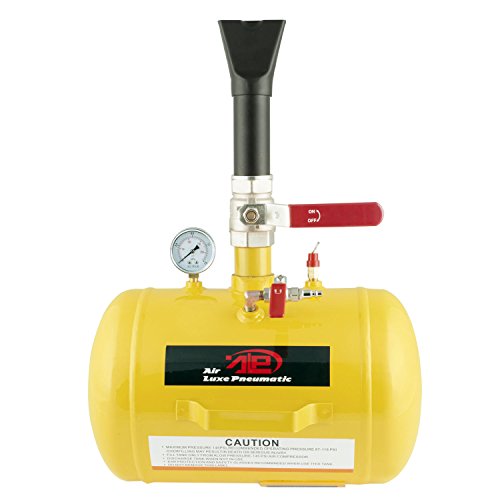
The TOOLUXE 5-gallon bead seater is designed for a broad range of tires, up to 24.5 inches. It features a heavy-duty steel tank with a powder-coated finish for durability and a CE-approved build. The included gauge allows users to monitor and fill to the recommended 87-116 PSI, aligning with standard shop practices. The unit is built to withstand rugged use in professional environments and is suitable for cars, trucks, tractors, RVs, ATVs, and more.
Operational considerations include a quick inflate capability and straightforward, easy-to-read gauge. The tool’s rugged construction is a key advantage for workshop reliability, and it’s suitable for fleets or regular tire service work where durability matters.
Pros
- CE approved, all-steel construction
- Clear, easy-to-read gauge
- Wide compatibility with several vehicle types
Cons
- May require more space than handheld models
BLACKHORSE-RACING 5 Gal Bead Seater — Gauge Included
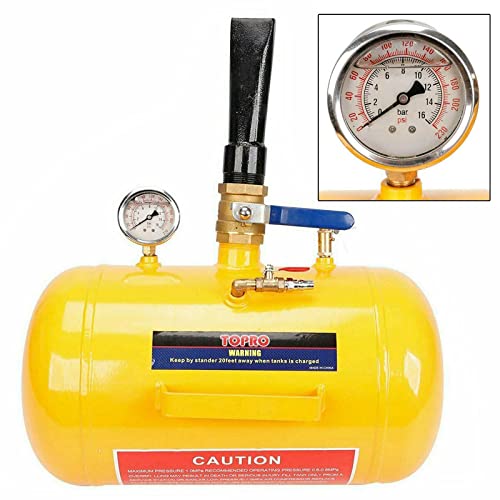
The BLACKHORSE-RACING bead seater provides a straightforward, reliable option for seating beads on heavy-duty tires. It features a dedicated air gauge for accurate readings and an on/off valve to control the filling process. The 5-gallon tank supports a range of vehicle types, including ATVs, tractors, cars, and trucks. The simple design focuses on durability and ease of use in busy shop environments, making it a practical choice for fleet maintenance or home garages alike.
Important considerations include proper seating technique, using protective gear, and adhering to the recommended pressure ranges. The model’s balance of capacity and simplicity makes it an appealing option for users who want a robust, no-fuss tool for regular tire bead seating.
Pros
- Straightforward gauge and control
- Rugged build suitable for heavy use
- Good value for 5-gallon capacity
Cons
- Limited advanced features compared to higher-end models
munirater 2.1 Gallon Bead Seater — Gauge Included

The munirater bead seater emphasizes portability with a 2.1-gallon capacity and a built-in air gauge for accurate readings. It operates within 87-116 PSI, suitable for a range of vehicles from motorcycles to cars and light trucks. The tool is designed for precise trigger seating and a durable steel construction that supports frequent use. The gauge helps ensure correct pressure levels across different tire sizes, contributing to safer and more efficient bead seating.
Operational notes include the need to wear eye protection and to follow standard safety procedures when seating beads. The unit’s compact size makes it ideal for mobile workshops or tight spaces where larger tanks are impractical.
Pros
- Compact and portable
- Integrated gauge for precise pressure
- Sturdy steel construction
Cons
- Limited capacity for large truck tires
Buying Guide: Key Purchase Considerations For Tire Bead Seaters
When selecting a tire bead seater, consider capacity, max operating pressure, vehicle range, portability, safety features, and durability. Larger capacities suit fleets and frequent tire work on trucks, tractors, and ATVs, but they require more space and handling effort. A higher max pressure (120-145 PSI) provides flexibility for larger rims and heavy-duty tires, while models in the 87-116 PSI range cover most passenger and light commercial tires. The gauge, safety valves, and ergonomic design reduce risk and improve operator control. For mobile operations, prioritize lighter, more compact units with reliable triggers and grips. Durability is vital in workshop environments; look for corrosion-resistant tanks and solid construction. Compare included safety features like automatic pressure relief and protective housings. Also assess warranty coverage and brand support for long-term reliability.
Other considerations include compatibility with common rim sizes (up to 24.5 inches), ease of maintenance, and availability of replacement parts such as gauges and seals. If you service a mix of vehicles—cars, SUVs, trucks, ATVs—select a model with a slightly higher max pressure and robust construction to accommodate a range of tire sizes. For occasional home use, a lighter 2.1-gallon model may suffice, offering portability without sacrificing essential performance. Finally, verify safety recommendations and PPE requirements from the manufacturer before operation.