Choosing a reliable tow rope or recovery strap is essential for safely recovering a vehicle or assisting others. This guide highlights five top-rated options that balance strength, durability, and user-friendly features. Each product below is selected for versatility across cars, trucks, SUVs, and ATVs, while offering varying elasticity, material makeup, and included accessories. Read on to compare capabilities, materials, and practical use cases to find the best tow rope for your needs.
| Product | Brand | Break Strength | Length / Size |
|---|---|---|---|
| JCHL Nylon Tow Strap with Hooks 2”x20’ | JCHL | 20,000 lbs | 2″ x 20 ft |
| OPENROAD Kinetic Recovery Tow Rope 1″ x 30 ft | OPENROAD | 36,000 lbs | 1″ x 30 ft |
| JCHL Recovery Tow Strap with Reinforced Loops 2”x20’ | JCHL | 26,000 lbs | 2″ x 20 ft |
| DAYDOOR Recovery Tow Rope 7/16″ x 30 ft UHMWPE | DAYDOOR | 31,200 lbs | 7/16″ x 30 ft |
| TireQuik Kinetic Recovery Rope 1″ x 30 ft | TireQuik | 48,500 lbs | 1″ x 30 ft |
Note: The table above summarizes key specifications. Consider vehicle weight, typical recovery scenarios, and the environment (mud, sand, snow) when choosing a rope or strap.
JCHL Nylon Tow Strap With Hooks
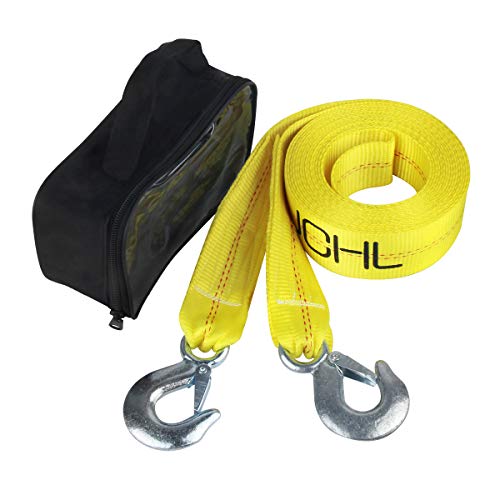
Product overview: 2 inch x 20 feet, yellow high-strength polyester strap. This strap offers a 20,000 lb break strength and is described as extra heavy-duty, suitable for vehicles, trucks, SUVs, and ATVs. It can function as a tree saver strap or winch extension strap in addition to towing. The design emphasizes durability under pressure and broad universal use across multiple vehicle types.
OPENROAD Kinetic Recovery Tow Rope

Product overview: A 1″ x 30 ft kinetic recovery rope with a 36,000 lb breaking strength. This professional-grade rope uses a double-braided nylon construction and provides 20% to 35% elongation during recovery, allowing efficient energy transfer. It includes anti-wear protective coatings and soft shackles to aid in secure connections and durability in extreme conditions. Ideal for off-road vehicle recovery, including Jeeps, trucks, and ATVs.
JCHL Recovery Tow Strap With Reinforced Loops

Product overview: This 2″ x 20 ft heavy-duty tow strap features reinforced loops and a 26,000 lb break strength. Made from high-strength polyester, it emphasizes durability, UV resistance, and minimal stretch under load. Its universal applicability covers vehicle towing, SUVs, ATVs, and cross-use as a tree saver or winch extension strap. It is designed to maintain performance across diverse climates and conditions without significant material fatigue.
DAYDOOR Recovery Tow Rope

Product overview: A UHMWPE-based tow rope of 7/16 inch diameter and 30 ft length, rated at 31,200 lb break strength. Includes two soft shackles and protective UV-resistant covering. The rope’s light weight, buoyancy, and low stretch make it a practical option for muddy terrains, water recoveries, and scenarios involving smaller recovery needs where weight is a factor. The kit is positioned for versatile off-road use in ATVs, UTVs, and cars.
TireQuik Kinetic Recovery Rope
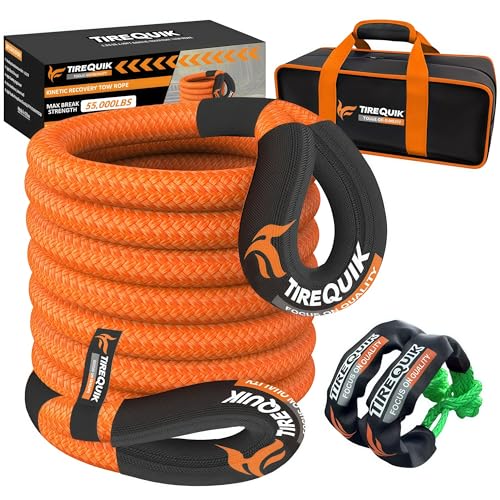
Product overview: A 1″ x 30 ft kinetic rope rated up to 48,500 lbs with 4x more energy storage than traditional tow straps. The kit includes two UHMWPE soft shackles with a high breaking strength (up to 60,600 lbs) and a protective cover for the rope. This option is suitable for heavy-duty off-road recoveries, including trucks, SUVs, and larger off-road equipment, with a focus on energy transfer and durability in harsh environments.
Rhino USA Kinetic Recovery Tow Rope

Product overview: This Rhino USA kinetic rope emphasizes American support and durability, with a minimum break strength around 52,600 lbs and 1.25″ diameter. It is designed for off-road recovery of tractors, heavy trucks, and larger equipment. The strap is engineered to stretch and store energy for smoother towing while maintaining resilience in adverse conditions. Aimed at a robust recovery setup for demanding scenarios.
Buying Guide
Key considerations when selecting a tow rope or recovery strap include materials, elasticity, and compatibility with your vehicle and typical recovery scenarios. Kinetic recovery ropes (nylon-based) offer higher energy transfer and endurance for off-road recoveries but are heavier and more expensive than standard tow straps. Tow straps made from high-strength polyester are durable, UV resistant, and useful for flat recoveries on plains or light-duty towing, though they provide less energy storage than kinetic options.
- Strength vs. weight: Higher breaking strength provides more safety margin but often increases weight and bulk. Match the rope to your vehicle’s gross vehicle weight rating (GVWR) and typical loads.
- Elasticity: Kinetic ropes elongate under load (typically 20–35%), reducing shock to both vehicles. Overly elastic ropes can complicate free recovery in sensitive or delicate environments.
- Diameter and length: Larger diameters handle greater loads; longer ropes extend reach for recovery in uneven terrain. Ensure your recovery points are compatible with the rope diameter.
- Soft shackles: Including UHMWPE soft shackles reduces risk of hook impact and minimizes metal-to-vehicle contact during recovery.
- Durability: UV resistance and abrasion protection extend rope life in sun-exposed or rugged terrain. Look for protective coatings and reinforced loop areas.
- Accessories: Protective sleeves, protective covers, and included shackles are practical for frequent travel and varied environments.
For best results, pair a kinetic recovery rope with a compact, durable flat tow strap for everyday use, while keeping the heavier kinetic option for serious off-road conditions. Always follow manufacturer instructions, use appropriate recovery points, and never exceed the rated capacities of your vehicle or gear. Consider climate and environment, as UV exposure, oils, and chemicals can affect rope performance over time.